Most freelancers and indie developers overpay on taxes because nobody ever handed them a clear list of what they can actually deduct. This is that list. Seven categories, every line item I know of, and a documentation note for each one telling you exactly what to save. Everything is on this page. No download, no signup.
It is almost never that they cheat themselves on purpose. It is that the system is built for W-2 employees and quietly punishes anyone whose financial life is more complicated than that.
When you take your first W-2 job, HR walks you through your benefits. When you become self-employed, nobody walks you through anything. The IRS has Schedule C and a thousand pages of guidance, but no one says "here is what you can write off." That is what this page is.
Knowing a deduction exists is one thing. Having the receipt, the percentage breakdown, and the business purpose written down is another. Without documentation, the deduction is theoretical. With it, the deduction is defensible. Each item below tells you exactly what to save.
Most freelancers use one card for everything. By April, business and personal charges are tangled across twelve months of statements. Sorting it out takes a weekend that nobody enjoys, and items always get missed. The fix is to track as you go, not in March.
Phone, internet, car, home office. All of these are partially deductible based on the business-use percentage. Most people leave them off entirely because they don't know how to calculate the percentage. A reasonable estimate, documented in writing, is fine. This page shows you how.
All seven categories, expanded. Each line item includes a specific note telling you what records to keep, where to find them, and how to calculate any business-use percentage that applies.
Category 01
If you have a space in your home used regularly and exclusively for work, you can deduct a portion of your housing costs. The simplified method (square footage × $5) requires no calculation. The actual-cost method captures more but takes more documentation. Full IRS rules are in Publication 587 (Business Use of Your Home).
Dedicated workspace square footage
Measure and photograph annually. The simplified method caps at 300 sq ft for $1,500. The actual-cost method has no cap.
Total home or apartment square footage
Pull this from your lease agreement or property records. Workspace divided by total equals your business-use percentage.
Annual rent or mortgage interest
Full-year total from your landlord or Form 1098. Multiply by your business-use percentage.
Utilities (electricity, gas, water)
Sum the year's bills. Apply the business-use percentage. Internet is separate, see Miscellaneous below.
Renter's or homeowner's insurance
Annual policy total. Apply your business-use percentage. The declarations page from your insurer is the document to keep.
Office repairs and maintenance
Repairs that affect only the office area are 100 percent deductible. General home repairs are pro-rated. Keep the invoice and a note about which room was affected.
Category 02
Hardware, subscriptions, and tools that you use for the business. Section 179 lets you deduct the full cost of equipment in the year you buy it, instead of spreading it across several years. For most indie devs and freelancers, that means your laptop is fully deductible the year you buy it.
Computers, monitors, and desk hardware
Original purchase receipt with date. Section 179 allows full deduction in the year of purchase, up to a generous annual limit. Confirm current Section 179 limits with your accountant.
Developer tools and platform fees
Apple Developer Program ($99/yr), Google Play Console one-time fee, Xcode Cloud, JetBrains, etc. Annual billing statements are the cleanest record.
Software and SaaS subscriptions
Design tools (Figma, Sketch, Adobe), productivity (Notion, Linear), code tools (GitHub, Cursor), AI services (Anthropic, OpenAI). Annual or monthly invoices work.
Cloud hosting, storage, and infrastructure
AWS, Cloudflare, DigitalOcean, Vercel, Render. Download year-end account summaries in December before the next year's billing starts overlapping.
External drives, backup hardware, and accessories
Drives, dock stations, ergonomic mice, mechanical keyboards. Receipts. If it is over $2,500, treat it as equipment and use Section 179.
Test devices for app developers
Phones, tablets, and watches you buy specifically for testing. The business-use percentage matters here. A test-only iPhone is 100 percent. A daily-driver phone you also test on is partial.
Category 03
Travel for work is fully deductible. Meals are 50 percent deductible, with a few exceptions. Local transportation for client meetings counts. The rule that catches people: travel must be primarily for business, not a vacation with one client lunch. Full guidance in IRS Publication 463 (Travel, Gift, and Car Expenses).
Flights, hotels, and lodging for business travel
100 percent deductible if the trip is primarily for business. Save the booking confirmation and a brief note on the business purpose for each trip.
Local transportation for client meetings
Mileage method (current IRS rate × miles) or actual-cost method (gas, insurance, depreciation × business-use percentage). Mileage is simpler. A simple log: date, destination, purpose, miles.
Conference and event registration fees
100 percent deductible. Save the registration receipt. If the conference includes meals, those meals fall under the 50 percent meal rule unless they are clearly inseparable from the registration fee.
Business meals with clients
50 percent deductible. The receipt, the date, the names of attendees, and a one-line note on the business purpose. "Coffee with Sarah, discussed Q3 contract" is sufficient.
Meals during overnight business travel
50 percent deductible. The IRS allows either actual cost or the federal per-diem rate. Per-diem is easier; actual cost can be higher in expensive cities.
Rideshare, taxis, parking, and tolls during business travel
100 percent deductible during a business trip. Save the email receipts. Uber and Lyft both have annual export options that make this easy.
Category 04
Education that maintains or improves the skills you already use in your business is deductible. Education that qualifies you for an entirely new profession is not. The line is whether the course makes you better at your current work.
Online courses related to your work
100 percent deductible if the course relates to your existing business. Save the enrollment receipt and a note on which skill the course supports.
Books, audiobooks, and technical publications
Books on craft, business, or your specific industry. Save Kindle and Audible annual order summaries. A general book on time management qualifies if your work involves time management.
Conference and workshop tickets
Already covered above for travel costs. Mention here because the registration itself is education-deductible even if you attend remotely.
Professional certifications and exam fees
AWS certifications, Apple Developer accreditations, project management certs, language certifications used for client work. The exam fee, study materials, and renewal fees all qualify.
Coaching, mentorship, or mastermind groups
Business coaching, technical mentorship, peer mastermind groups. Save monthly invoices. The IRS expects a clear connection between the coaching and your business operations.
Industry publications and paid newsletters
Substack subscriptions, premium podcast feeds, trade journals, Stratechery, etc. Annual or monthly billing receipts.
Category 05
Anything you spend to get clients or customers is deductible. This includes the website that hosts your work, the ads that drive traffic to it, and the design tools you use to make it. All 100 percent deductible.
Website hosting, domains, and SSL
Cloudflare, Vercel, Netlify, GoDaddy, Namecheap. Annual or monthly invoices. Domain registrations show up as one-line items, which is fine.
Paid advertising (search, social, sponsorships)
Google Ads, Meta Ads, Reddit Ads, podcast sponsorships, newsletter sponsorships. Each platform offers an annual export that summarizes the year's spend.
Freelance platform and marketplace fees
Upwork, Fiverr, Contra, Toptal service fees. The fees are deductible; the gross income is income. Many platforms send 1099s that show the fee separately.
Design tools and brand assets
Figma, Canva, Adobe Creative Cloud, stock photo licenses, custom fonts. Receipts for any one-time purchases. Subscription invoices for the rest.
Email marketing and CRM subscriptions
ConvertKit, Mailchimp, Beehiiv, HubSpot, Pipedrive. Monthly invoices. If your tier is based on subscriber count, the invoice usually shows the price tier, which is helpful for records.
Portfolio printing, business cards, swag
Vistaprint orders, Moo cards, Printful merch, branded notebooks for events. Receipts. If you give swag to clients, that is also deductible as a client gift, though gift deductions are capped per recipient.
Category 06
This is where most freelancers leave the most money on the table. The self-employed health insurance deduction is taken above the line, meaning it reduces your AGI directly. Retirement contributions stack with that. Together they can shelter five figures of income for the average freelancer.
Self-employed health insurance premiums
100 percent deductible above the line. Year-end statement from your insurer. Includes premiums for you, your spouse, and dependents. Dental and vision premiums also qualify.
SEP-IRA contributions
Up to 25 percent of net self-employment income, with an annual cap that adjusts each year. The contribution can be made any time before the tax filing deadline. Year-end statement from your brokerage.
Solo 401(k) contributions
Higher limits than a SEP-IRA in most cases because you can contribute as both employee and employer. Best for freelancers earning over $100K. Setup is more involved but the limits are worth it.
HSA contributions
If enrolled in a qualifying high-deductible health plan, contributions are deductible. The HSA is the only triple-tax-advantaged account: deductible going in, tax-free growth, tax-free withdrawals for medical expenses.
Disability insurance premiums
Generally deductible if structured correctly, but the rules around taxability of benefits can flip based on how premiums are paid. Talk to your CPA before taking this deduction.
Category 07
The catch-all. Most of these are partial deductions that depend on your business-use percentage. The key rule: if any portion is used for business, document the percentage and deduct that portion. Don't leave it at zero just because it isn't 100 percent business.
Business portion of your phone bill
Estimate your business-use percentage and document it in writing. "70% based on March usage review" is sufficient. Apply that percentage to the year's total bills.
Business portion of your home internet
Same logic as phone. Most freelancers can defensibly claim 50 to 80 percent. Save your annual ISP statement.
Bank and payment processing fees
Stripe, PayPal, Square, Wise, Mercury account fees, business account monthly fees. 100 percent deductible. Most processors offer an annual fee summary export.
Professional services
Accountant, bookkeeper, tax preparer, attorney, financial advisor for business matters. 100 percent deductible. Their invoices, including last year's tax prep fee.
Business insurance premiums
General liability, professional liability (E&O), cyber insurance. Save the annual policy declarations page and proof of payment.
Office supplies, postage, and shipping
Pens, paper, printer ink, USPS or FedEx shipping for client work. 100 percent deductible. Receipts.
Coworking space membership
100 percent deductible. Note that if you also claim a home office deduction, the IRS expects the coworking space to be a clear separate business location, not a sometimes-substitute for the home office.
Not tax advice. This reference is intended to help freelancers and self-employed individuals understand common deduction categories. Tax laws change, eligibility depends on your individual circumstances, and the information here may not reflect recent IRS updates. Consult a qualified CPA or enrolled agent before making deduction decisions.
Documentation is the difference between a deduction that survives an audit and one that doesn't. The rules are simpler than they sound. Four principles cover almost everything.
Every deductible expense needs a record showing what you paid and when. Bank or credit card statements suffice for most purchases. For larger items, keep the original receipt because statements show the merchant but not the line items.
A one-line note about why this expense was for the business. "Coffee with Sarah, discussed website project" is enough. The IRS isn't looking for a thesis. They want a contemporaneous note that connects the expense to the work.
For partially-deductible expenses (phone, internet, vehicle, home office), you need to document the percentage and how you arrived at it. A reasonable estimate based on actual usage is acceptable. Document the estimate in writing the day you make it, not in April.
In December, download annual statements from every account, platform, and service that has them. Stripe, AWS, your phone carrier, your credit card company, your insurance provider. A folder per year on your computer is sufficient. Cloud backup is better.
These are the recurring mistakes that cost freelancers money or peace of mind. Each one is fixable with a small habit change long before April.
Skipping the home office deduction because they think it triggers audits
The audit-trigger reputation is mostly outdated. The simplified method requires almost no calculation: square footage times $5, capped at $1,500. If you have a dedicated workspace, take the deduction. The simplified method is specifically designed to be defensible without complicated math.
Treating quarterly taxes as a year-end problem
If you owe more than $1,000 at year end, the IRS expects quarterly estimated payments. Skip them and you owe penalties on top of taxes. The fix is small: set aside 25 to 30 percent of every payment as it arrives, in a separate savings account. By April you have the money, and the quarterly payments come from the same pool. The 30-day budget kickstart includes a tax-set-aside checkpoint on day 24.
Mixing personal and business spending on one card
It is fine if you only have one card, but every time you use it for business, you create an entry that has to be sorted later. The cleanest fix is one card you use only for business, even if it is a regular personal credit card. Then the statement is the record.
Forgetting to deduct health insurance and retirement
These two categories alone can shelter five figures of income for an average freelancer. Self-employed health insurance is an above-the-line deduction. SEP-IRA or Solo 401(k) contributions reduce your taxable income directly. Both are easy to set up and almost always overlooked by people doing taxes themselves.
Hiring a CPA only at year-end
A CPA who sees your books for the first time on April 1 can only file what's there. A CPA who reviews a Q3 estimate and a year-end position can give you actual planning advice. The difference is a few hundred dollars in fees and often thousands in tax savings.
Knowing the deductions exist is half the work. Tracking them through the year so you have the records to back them up is the other half. Three realistic approaches.
Most freelancers under $100K in revenue need an app, not a bookkeeper. Try Balance Pro if you want this tracked automatically.
When you become self-employed, you don't just owe income tax. You also owe self-employment tax (IRS Topic 554), which covers Social Security and Medicare. As a W-2 employee, your employer paid half of these taxes. As a freelancer, you pay both halves: 15.3 percent of your net self-employment income, on top of your regular income tax.
This is the number that most first-year freelancers don't see coming. They calculate their income tax bracket, set aside that percentage, and then get a much bigger bill because the self-employment tax stacked on top. The fix is simple: assume an additional 15.3 percent in your tax-set-aside calculation. If you were planning on 22 percent for federal income tax, set aside 37 percent. State income tax, if applicable, sits on top of that.
The good news: you get to deduct half of your self-employment tax as an above-the-line deduction. It is automatic on Schedule SE. You don't have to claim it; the form does it for you.
The IRS requires estimated quarterly payments (Form 1040-ES) if you expect to owe more than $1,000 in taxes for the year. The deadlines: April 15, June 15, September 15, and January 15. Miss them and you owe interest plus a penalty on the unpaid balance.
The simple way to estimate, if you had a previous year of self-employment income, is the safe harbor rule. Pay 100 percent of last year's total tax (110 percent if your AGI was over $150K), divided into four equal quarterly payments. Do that and the IRS won't penalize you for underpayment, even if your current year's income is much higher.
If this is your first year as a freelancer and you have no previous year to reference, the rule of thumb is to set aside 30 to 35 percent of every payment you receive. That covers federal income tax, self-employment tax, and a typical state income tax. Adjust based on your state and your actual tax bracket. After your first full year of taxes, your CPA can give you a more precise number.
If your freelance income is under $50K and your situation is simple (one income source, no LLC, no employees), you can probably file your own taxes with software like FreeTaxUSA or H&R Block's online filer. The interfaces walk you through Schedule C and Schedule SE without much fuss, and the cost is under $100.
Above $50K, or if you have multiple income sources, an LLC or S-corp election, employees, or business income from multiple states, hire a CPA. Specifically, hire one who specializes in working with freelancers, sole proprietors, and small business owners. A general CPA who mostly serves W-2 employees will miss things. A self-employment-focused CPA will save you their fee in deductions you didn't know to take.
Look for someone who responds within a week, who offers a quarterly check-in (not just an April scramble), and who is willing to teach you. The best CPA for a freelancer is one who explains why a deduction works, so you can take advantage of it next year without asking.
The IRS recommends keeping records for at least three years from the date you filed the return, or two years from the date you paid the tax, whichever is later. For records related to property (equipment depreciation, home office basis), keep them as long as you own the property plus three years.
In practice: keep everything for seven years. Storage is cheap, and the peace of mind matters when an audit notice arrives. A folder per year, organized by category, on a cloud drive (Google Drive, Dropbox, iCloud) is plenty. The IRS accepts digital records.
The records that matter most: bank and credit card statements, all 1099s received, mileage logs if you claim vehicle expenses, copies of filed returns, and any documentation supporting unusual deductions (a written estimate of your phone's business-use percentage, for example). Skip the to-do of filing every coffee receipt; the credit card statement is the record.
For most business deductions, yes. The IRS requires records showing the amount, date, place, and business purpose of each expense. Bank and credit card statements often suffice for smaller purchases, but for larger items like computers or office furniture, keep the original receipt.
The home office deduction has a reputation for triggering audits, but that reputation is mostly outdated. If you have a space used regularly and exclusively for business, you qualify. The simplified method multiplies your workspace square footage by $5 per square foot and requires no complex calculation.
Yes, but only the business-use percentage. If you use your phone about 70 percent of the time for work, you can deduct 70 percent of the annual bill. The same logic applies to your home internet. Document your estimate in writing.
Section 179 of the tax code lets you deduct the full cost of qualifying equipment in the year you purchase it, rather than spreading it over several years. For most freelancers, this means your laptop, monitors, and peripherals are fully deductible in year one.
This reference covers federal income tax deductions for U.S.-based freelancers filing Schedule C. State rules vary significantly. Check your state's department of revenue website or ask a local CPA if you're unsure how your state handles any item on this list.
Balance Pro connects to your bank and credit card accounts and categorizes transactions throughout the year. When tax season arrives, you have an organized record of business expenses by category instead of a pile of statements to sort through manually. The Ultra plan includes automatic bank sync via Plaid.
For tax purposes, a single-member LLC is treated identically to a sole proprietorship by default. Both file Schedule C with their personal return. The LLC offers liability protection, but the tax filing is the same. Things only change if you elect S-corp tax treatment, which has its own tradeoffs and is usually not worth it under $80K to $100K of profit.
The reference above tells you what to deduct. Balance Pro Ultra ($99.99 per year) tracks every business expense automatically, categorized to match the list above, so you have the records to back up every deduction at tax time. Premium ($47.99 per year) covers manual tracking with the same categories.
Track every business expense throughout the year, categorized to match the IRS Schedule C lines. When tax time comes, your CPA gets a clean export and you keep more of what you earned.
Get Started Free

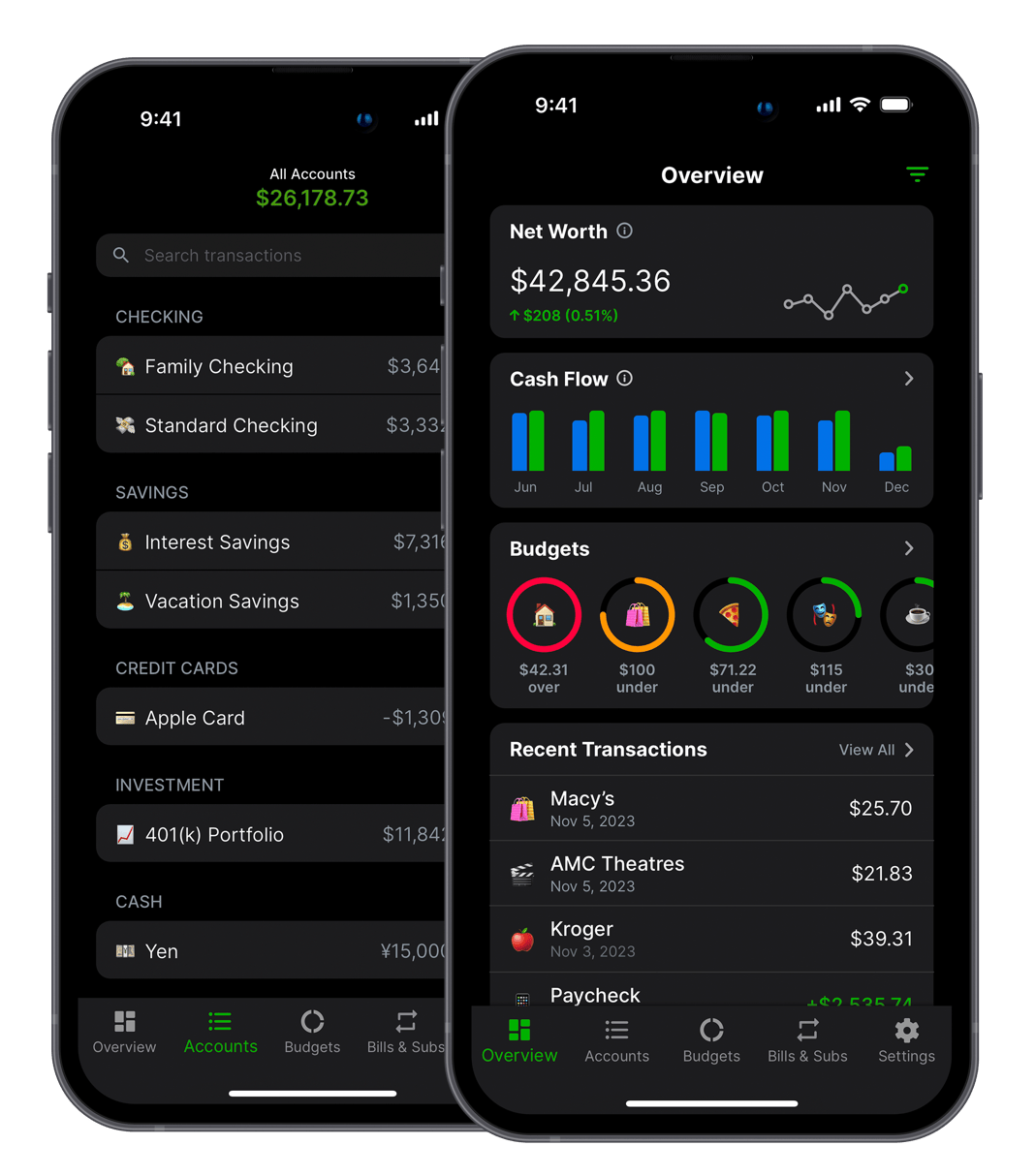

Balance Pro is a budgeting and personal finance app that helps you manage and optimize your money. Built by Jordan Kennedy in Nashville.
Download


Also from this developer

GrowthMap
GrowthMap is a tool that generates actionable growth reports for indie developers and solo founders.

Limelight
Never wonder what to watch again. Discover, track, and enjoy the best movies and shows.

Trivia Party
Trivia Party is a quiz game with over 12,000 questions across a variety of fun categories.
