


Key takeaways
- A budget built on your actual spending data is far more accurate than one built on estimates, so start by tracking before you restrict.
- Separate fixed expenses from variable ones: fixed expenses tell you your floor, variable ones tell you where you have room to adjust.
- The 50/30/20 framework is a useful starting point, but most people need to customize the ratios to fit their real cost of living.
- Sticking to a budget requires a weekly check-in habit, not just a once-a-month glance at the numbers.
- Impulse purchases and lifestyle creep are the two most common budget killers, and both are solvable with a small amount of friction added to the process.
Most people know they should have a budget. The part they get stuck on is how to create a budget that actually holds together after the first week. The spreadsheet method works fine until life happens. An irregular expense shows up, a subscription renews, and suddenly the whole plan feels irrelevant. What I've found, both from building a finance app and from managing my own money as a freelancer, is that a budget fails most often because it was built on guesses rather than real numbers.
This guide walks through how to create a budget from scratch using your actual spending as the foundation, how to set category limits that reflect reality, and the habits that make it stick over time.
Why do budgets fail, and what actually works?
The most common reason a budget falls apart is that the initial numbers were invented. People guess what they spend on groceries, underestimate dining out, and forget entirely about annual expenses like insurance renewals or car registration. When reality diverges from the plan, which it will, there's no system to absorb the difference.
What works is starting with observation rather than restriction. Before setting any limits, spend 30 days tracking what you actually spend. This gives you a baseline that reflects your real life, not an idealized version of it. From there, you can make deliberate decisions about where to trim, where to hold steady, and where to put more resources.
The second common failure is that people treat a budget like a one-time setup rather than a living document. Income changes, expenses shift, and priorities evolve. A budget that isn't revisited at least monthly will drift out of alignment with your actual situation within a quarter.
How do I set financial goals before building my budget?
A budget without a goal is just a record of expenses. Before setting any category limits, get clear on what you're actually trying to accomplish. Goals fall into two categories: short-term and long-term, and both belong in your budget from the start.
Short-term goals are things you want to accomplish within the next 12 months: building an emergency fund, paying off a credit card, or saving for a trip. These translate directly into budget line items. If you want to save $1,200 for an emergency fund in 12 months, that's $100 per month allocated before anything else.
Long-term goals include things like a down payment on a house, retirement contributions, or funding a sabbatical. They require consistent, sustained effort rather than an intense sprint. The key is converting them into monthly dollar amounts so they become concrete budget entries, not vague intentions.
When you have competing goals, prioritize by urgency first, then importance. High-interest debt is almost always the most urgent thing to address because the interest cost compounds against you. Once that's cleared, you can redirect those dollars toward long-term savings with real momentum behind them.
How do I calculate my monthly income for budgeting?
For salaried employees, this is straightforward: use your take-home pay after taxes and deductions. If you have a side income, add a conservative estimate based on your last six months of earnings rather than your best month.
For freelancers and self-employed people, the calculation matters a lot more. I've been managing irregular income for years, and the approach that works is to use the lowest reliable month from the past six months as your baseline. Budget as though that's all you'll earn. In months where you earn more, route the surplus to a buffer account first, then to goals. This prevents lifestyle creep and protects against the lean months that will inevitably come.
A few specific steps to get to your monthly income number:
- List all income sources: salary, freelance, rental income, side projects, and any other consistent inflows.
- Convert everything to after-tax: your take-home amount, not gross. If you're self-employed, factor in estimated quarterly taxes.
- Handle variable income conservatively: use a three- to six-month average, or your lowest reliable month if income swings significantly.
- Update quarterly: if your income situation changes, your budget baseline needs to change with it.
What is the difference between fixed and variable expenses?
Fixed expenses are the costs that stay constant every month regardless of what you do: rent or mortgage, insurance premiums, loan payments, and subscription services. These define your financial floor. Add them up, and you immediately know the minimum your budget must cover before any discretionary spending happens.
Variable expenses fluctuate based on choices and circumstances: groceries, dining out, entertainment, transportation beyond a fixed car payment, and clothing. These are where most budget decisions actually live, because they're the costs you can influence month to month.
There's a third category worth naming: irregular expenses. These are real costs that don't show up monthly but are entirely predictable if you think about them, things like annual car registration, holiday gifts, or a yearly insurance renewal. The way to handle them is to estimate the annual total, divide by 12, and include that amount as a monthly budget line. When the bill arrives, the money is already set aside.
Understanding needs versus wants runs through all three categories. A need is something required for your baseline wellbeing: food, shelter, healthcare, transportation to work. A want enhances your life but isn't essential to it. The distinction isn't always clean, and that's fine. The point is to make conscious decisions rather than letting defaults drive the budget.
How to create a realistic budget in nine steps
Here's a practical sequence that works whether you're building your first budget or rebuilding one that fell apart:
- Pull 60 to 90 days of bank and credit card statements. This is your raw data. Don't skip this step.
- Categorize every transaction. Housing, utilities, groceries, dining, transportation, subscriptions, healthcare, and so on. Be honest about which category things actually belong in.
- Calculate your monthly average per category. Look at three months and average them. Some months will be outliers; the average smooths those out.
- Add your income to the top of the picture. Subtract total average spending from monthly take-home. If you're spending more than you earn, you'll see it immediately.
- Set category limits based on your averages, not wishes. If you've been spending $600 per month on groceries, setting a $300 limit will fail. Start closer to your real number and work down from there.
- Allocate savings goals as fixed line items first. Treat savings like a bill. If it goes in after all the other spending is done, it usually doesn't happen.
- Build in an irregular expenses buffer. Estimate your annual irregular costs, divide by 12, and set that aside monthly.
- Leave room for discretionary spending. A budget with no breathing room will collapse. People need some allocation for fun, hobbies, and small treats. Making that explicit is better than pretending you don't spend on it.
- Check that income minus expenses is positive. If not, identify which variable categories to trim before cutting anything from goals or irregular expenses.
How do I track spending consistently after setting my budget?
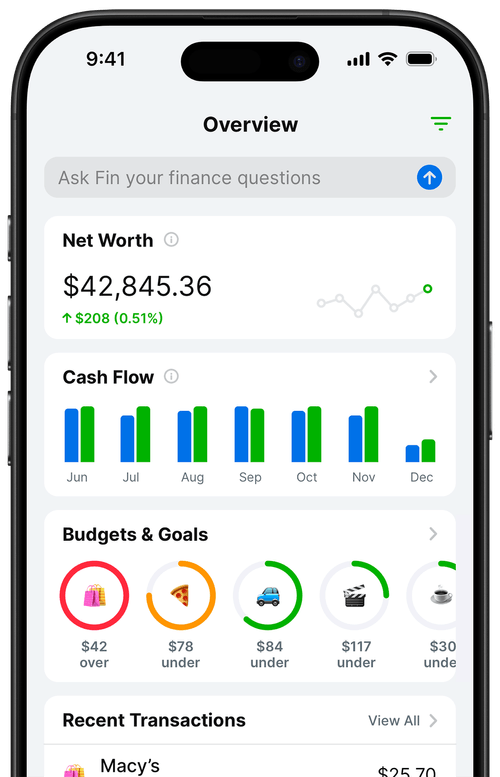
Setting up a budget is the easy part. The harder part is maintaining visibility into your spending between the time you set limits and the end of the month when you review results. Most people discover they're over budget on dining out around day 22, which is too late to do anything about it that month.
The solution is a weekly check-in habit, not a monthly one. Five minutes each week to review what you've spent against your category limits is enough to catch problems while there's still time to course-correct. This doesn't have to be a full audit. It's just a quick scan to confirm you're on track and flag any categories that are running high.
Keeping detailed records matters for two reasons. First, it gives you an accurate picture of your actual financial behavior rather than a remembered version of it. Second, it generates the historical data that makes future budgets more accurate. The first month of a budget is always rough because it's built on estimates. By month three, you have real patterns to work from.
When you review your spending, look for three things: categories where you consistently overspend, categories where you consistently underspend (which might mean the limit is too high, or that category needs to go toward a goal), and any new recurring charges you didn't plan for.
How much should I set aside for an emergency fund?
The conventional recommendation is three to six months of living expenses. That number can feel paralyzing if you're starting from zero, so break it into phases. Phase one is $1,000. That covers most car repairs, unexpected medical copays, and other common one-off emergencies without touching a credit card. Once you have $1,000 set aside, expand toward one month of expenses, then build from there.
The best way to build an emergency fund is to automate it. Set up a recurring transfer to a separate savings account on the same day your paycheck hits. When the money moves before you see it in your checking account, you stop thinking of it as available to spend. Many people find that an amount they thought would feel painful to save becomes invisible within a few weeks.
When a real emergency happens and you draw down the fund, treat replenishing it as a priority in the following months. An emergency fund that never gets refilled after use stops being a fund and becomes a one-time buffer.
How do I avoid impulse purchases that wreck my budget?
Impulse buying is driven by a combination of emotional state, convenience, and the psychology of scarcity and social influence. Retailers are very good at engineering environments, whether physical stores or apps, to trigger unplanned purchases. Understanding that the system is designed against you makes the countermeasures easier to apply without self-judgment.
The most effective tactic I've found is the 24-hour rule for anything that isn't on your planned shopping list. If you want to buy it, you have to want it again tomorrow. Most impulse purchases fail that test. For larger purchases, extend the window to a week or two. Use that time to research alternatives and compare prices. The enthusiasm for a spontaneous purchase almost always fades during that period, and if it doesn't, the purchase was probably a real priority that belongs in your budget anyway.
A few additional tactics that work in practice:
- Unsubscribe from promotional emails from any retailer you're tempted to buy from impulsively. Out of sight genuinely helps.
- Use cash for discretionary spending categories. When the physical cash in your dining-out envelope is gone, it's gone. The tangibility creates friction that digital payments don't.
- Avoid shopping when tired, stressed, or anxious. Emotional state is one of the strongest predictors of impulse spending.
- Build a wishlist habit. When you want something, add it to a list rather than buying it immediately. Review the list monthly. Most items quietly drop off on their own.
How do I find expenses to cut without gutting my quality of life?
The first pass at expense reduction is always subscriptions. Most people have at least two or three services they're paying for monthly that they haven't used in the last 30 days. Pull up your bank statement, find every recurring charge, and decide intentionally whether to keep each one. Cancel anything you can't name a specific use for in the last month.
The second pass is negotiation. Many service providers, including internet, cable, and insurance companies, will reduce your rate if you call and ask, especially if you can cite a competing offer. This works more reliably than most people expect. A 20-minute phone call can save $300 or more annually on a single bill.
The third pass is substitution: finding a comparable service at a lower price. Generic brands for household staples, a less expensive mobile carrier, a cheaper streaming bundle. The quality difference for most of these is minimal, and the savings add up to real money redirected toward goals.
The cut that most people avoid is the one that would actually move the needle: a high fixed cost like rent or a car payment. These are harder to change, but they're often the source of the biggest budget pressure. Renegotiating a lease, downsizing a vehicle, or moving to a lower-cost area isn't always possible, but it's worth running the numbers on.
How do I stay motivated to stick with my budget long-term?
The people who stick with a budget are usually not the ones with the most discipline. They're the ones who've made the budget feel like it's working for them rather than against them. A few practices that sustain motivation over time:
- Attach the budget to a specific goal. "I'm building a $6,000 emergency fund" is more motivating than "I'm cutting spending." When the goal is concrete, progress toward it feels meaningful.
- Celebrate small wins without spending money on them. Finishing a month under budget or hitting a savings milestone deserves acknowledgment. Write it down, tell someone you trust, or mark it somehow.
- Build in discretionary spending you enjoy. A budget that has no room for anything fun will feel punishing. A specific allocation for entertainment, dining, or hobbies isn't a failure of discipline. It's a design feature that makes the rest of the budget sustainable.
- Adjust without catastrophizing. Going over budget in one category doesn't mean the system failed. It means one category needs a more accurate limit. Adjust it and move on.
Financial literacy also compounds over time. The more you understand how interest works, how tax-advantaged accounts work, and how small consistent habits translate into larger outcomes, the more naturally motivated you become to stay engaged. Reading one piece of solid personal finance content per week is enough to build that foundation steadily.
When should I get professional financial advice?
A budget is something you can build and manage yourself. But certain situations genuinely benefit from a professional perspective: significant debt, complex tax situations, approaching retirement, major life transitions like divorce or inheritance, or any point where you feel like you're making decisions blind.
Several resources offer free financial counseling for people who don't have the budget for a paid advisor. The National Foundation for Credit Counseling (nfcc.org) connects people with nonprofit counselors for debt and budgeting help. The Consumer Financial Protection Bureau (consumerfinance.gov) offers free tools and guides on budgeting, credit, and financial planning. Many credit unions also offer free financial counseling to members.
For most people, especially those just starting to get their finances organized, a solid budget tool combined with a consistent weekly review habit will get you further than you'd expect without any outside help.
Frequently Asked Questions
How do I create a budget if my income varies each month?
Use a conservative baseline: average your last three to six months of income and build your budget around that number. In months where you earn more, route the extra toward savings or debt repayment rather than inflating your spending baseline.
What is the 50/30/20 budgeting rule?
The 50/30/20 rule allocates 50 percent of after-tax income to needs, 30 percent to wants, and 20 percent to savings or debt repayment. It's a useful starting framework, though most people need to adjust the ratios based on their actual cost of living.
How long does it take to build a working budget?
An initial budget takes about an hour to set up if you have access to two or three months of bank statements. The budget gets more accurate after 60 to 90 days of tracking, because you'll have real spending data to replace your estimates.
What should I do when I go over budget in a category?
Don't abandon the whole budget. Look at where the overage came from: was it a one-time expense or a recurring pattern? If it's recurring, adjust that category's limit. If it was one-time, note it and move on without guilt.
How often should I review my budget?
A quick weekly check-in takes five minutes and prevents small overspend from compounding. A deeper monthly review lets you adjust category limits and recalibrate toward your goals. Review any time a major life change affects your income or expenses.
The bottom line on building a budget that holds
Creating a budget isn't about restricting yourself into a joyless existence. It's about making deliberate choices rather than spending by default and wondering where everything went. The people who stick with a budget are usually the ones who built it on real numbers, left room for the parts of life they actually enjoy, and committed to a simple weekly review habit rather than a once-a-month audit.
Start with your actual spending data. Set limits that reflect reality, not aspirations. Build in your savings goals as fixed line items from day one. And revisit the budget regularly enough to catch problems while you still have time to fix them.
Related reading: Strategies for tracking expenses and saving money, How much money to set aside for emergencies, and Making better financial decisions.