


Key takeaways
- Tracking expenses works by making invisible spending visible, which is the necessary first step before any budget can work.
- Five to eight categories is the practical sweet spot: enough granularity to act on, not so many that the system collapses under its own weight.
- A weekly five-minute review beats a monthly deep-dive for catching overspending before it compounds.
- You do not need to connect a bank account to start tracking; manual entry is a valid, private, and often more mindful approach.
- The savings from consistent tracking typically come from three places: subscriptions you forgot about, dining out more than you realized, and impulse purchases you mentally categorized as "small."
Tracking your expenses and saving money each month sounds like advice that belongs in a personal finance book from 1994. Write things down. Spend less. Obvious. The reason people still struggle with it is not ignorance. The gap between knowing and doing is enormous, and most systems designed to close that gap ask too much of you up front. What actually works is simpler and less glamorous than you might expect.
I built a personal finance app because I kept watching people start budgets and quit inside of six weeks. The problem was almost never motivation. It was that they had no clear picture of their baseline spending before they tried to set targets, so the targets were arbitrary and the budget felt like a punishment. The fix is spending a few weeks tracking before you try to optimize anything. The data does the work.
How does tracking your expenses actually change your spending habits?
The mechanism is called the observer effect, and it applies to money as much as it does to physics experiments. When you know you are watching your spending, you spend differently. Not because you are forcing willpower, but because the act of recording a transaction creates a brief moment of conscious awareness that breaks the automatic pilot most purchases happen on.
Research consistently shows that people underestimate discretionary spending by 20 to 40 percent. Dining out and entertainment are the biggest culprits, not because people are dishonest with themselves, but because individual transactions feel small in the moment. A $14 lunch on a Tuesday barely registers. Eighteen of those lunches in a month is $252, which is a meaningful number that most people would not willingly allocate to "weekday lunches" if they saw it written down first.
Tracking does not require willpower to produce results. The awareness it creates changes behavior passively, almost automatically, which is why it works even for people who have failed at strict budgets before.
How do you track your expenses when you have no system yet?
The fastest path to a working system is also the lowest-tech one: log every purchase in a notes app for one week. Not a spreadsheet, not a dedicated app. Just a running list. Write the amount and a single word for the category. $14 lunch. $3.50 coffee. $62 grocery. Do this for seven days without trying to optimize or judge what you are spending.
After seven days you will have three things you did not have before: a rough picture of where money actually goes, a list of categories that reflect your real life rather than a generic budget template, and a baseline number for each category that is grounded in evidence rather than optimism. That baseline is what makes everything else work. Budget targets set from real data stick. Targets set from aspirational guesses do not.
If you want to move to a more structured system after the first week, the priority is consistency over sophistication. A spreadsheet you update every day beats a feature-rich app you open twice a month.
How should you categorize expenses to spot where money is leaking?
Five to eight categories is the practical sweet spot for most people. Fewer than five and the data becomes too blurry to act on; more than ten and the system becomes a burden that collapses within a few weeks. A starting set that works well for most households: housing, food (groceries and dining separate), transportation, subscriptions, personal care, and a catch-all miscellaneous bucket.
Separating groceries from dining out is one of the highest-value categorization decisions you can make. Most people are surprised by the dining number once they see it isolated. Subscriptions deserve their own category for the same reason: the individual amounts feel trivial, but the aggregate is often $80 to $150 per month for services people use irregularly or have forgotten about entirely.
The miscellaneous bucket matters too. If you find more than 15 to 20 percent of your spending landing there each month, it is a signal that you need to split it into real categories. A large miscellaneous total is the financial equivalent of a junk drawer: it feels organized until you actually need to find something.
Once categories are set, look at the percentage each represents of your total spending rather than the raw dollar amount. A $400 grocery bill means something different at a $3,000 monthly income than at a $7,000 monthly income. Percentages make the picture comparable across months and across people.
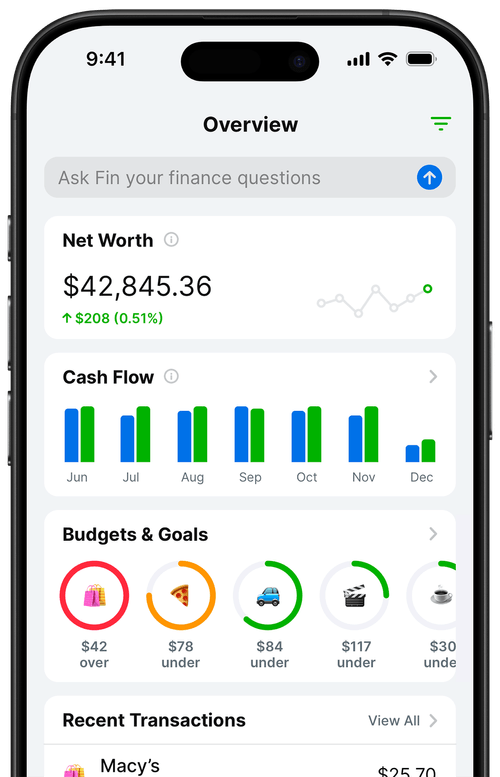
How much money can you realistically save by tracking consistently?
There is no universal answer, because it depends on how unaware your spending has been. For someone who has never tracked before, finding 10 to 20 percent of income going to categories they considered minor is not unusual. The three most common sources are subscriptions you forgot about, dining out more than you estimated, and a pattern of small impulse purchases that individually feel negligible.
A useful mental model: if tracking reveals you are spending $180 per month on dining out and you set a target of $100, that is $80 per month redirected to savings. Over 12 months that is $960 without a dramatic lifestyle change. Add a $40 reduction in forgotten subscriptions and you are at $1,440 per year from two adjustments. Compounded over a few years and invested, those numbers get considerably more interesting.
The mistake most people make is trying to cut everything at once. Tracking first, then picking one or two categories where the gap between actual spending and what you would willingly allocate is largest. That narrower focus is far more effective than a sweeping resolution to "spend less on everything."
It is also worth noting that tracking has a passive savings effect independent of any intentional cuts. Studies on spending awareness consistently find that people who log purchases reduce discretionary spending by 15 percent on average without setting formal targets. The awareness itself does the work.
How do you build a weekly review habit that actually sticks?
The review habit fails for two reasons. Either it is too infrequent (monthly reviews come after the damage is done) or it is too onerous (an hour-long audit nobody wants to schedule). The fix is making it short enough to feel trivial and frequent enough to catch problems early.
Five to ten minutes, once a week, at the same time. Sunday evening works well for many people because it sits naturally at the end of one week and the start of another. The questions to answer each week are narrow: Am I on pace in my two or three highest-spend categories? Did anything unexpected hit this week that I should plan around? Is there a subscription charge I do not recognize?
Habit stacking helps considerably. Attaching the review to something you already do every week (Sunday coffee, a weekly standup, a show you watch with your partner) removes the decision of when to do it. Once the timing is automatic, the review itself becomes a low-friction routine rather than a chore you procrastinate.
The goal of a weekly review is not perfection. It is a brief course correction before small overspending becomes a month-ending problem. Think of it less like an audit and more like checking the weather before you go out.
How do cash-based strategies compare to app-based expense tracking?
Both work. They address the same underlying problem from different angles, and the right choice depends on how your brain responds to money being abstract versus physical.
Cash creates a hard constraint. When the envelope for dining out is empty, the budget is over. Not negotiable, not requiring any willpower. For people who find digital spending easy to rationalize, physical cash removes the rationalization entirely. The downside is friction: withdrawing cash, sorting it into envelopes, and losing the purchase history that makes pattern analysis possible. Cash also does not work well for online purchases, recurring bills, or anyone who finds carrying cash more stressful than helpful.
App-based tracking has the opposite profile. It accommodates the full variety of modern spending including digital purchases and automatic payments, provides a history that makes trend analysis possible, and works with minimal physical friction. The weakness is that digital money feels less real to some people, which means the psychological constraint is weaker. You can always tell yourself you will catch up next week.
A hybrid approach works well for many people: cash for the one or two categories where you consistently overspend (usually dining out and entertainment), and an app for everything else. The cash categories get the hard constraint where you need it most; the app gives you the full picture. Neither system requires the other to be abandoned.
The category to be most careful about when using any card-based system is subscription spending. Subscriptions are silent: they do not feel like spending because no decision happens at the point of charge. A weekly review with an eye specifically toward subscription lines is the most practical countermeasure.
Frequently Asked Questions
How do I start tracking my expenses if I have no system in place?
Start with one week of manual logging in a notes app or spreadsheet. Write down every purchase as it happens, with a brief category label. After seven days you will have enough data to identify your three largest spending categories, which is where most people find the most room to save.
How many spending categories should I use?
Five to eight is the practical sweet spot for most people. Too few and the data is too blurry to act on; too many and the system becomes a maintenance burden. A solid starting set: housing, groceries, dining out, transportation, subscriptions, personal, savings, and a miscellaneous catch-all.
How much money can I realistically save by tracking my expenses?
People who have never tracked before often find 10 to 20 percent of their income going to categories they considered minor, particularly dining out, subscriptions, and small impulse buys. Redirecting even half of that adds up to meaningful savings over a year. Passive awareness savings from tracking alone average around 15 percent of discretionary spending in research studies.
How often should I review my spending?
A five-to-ten minute weekly check-in beats a monthly deep-dive. Weekly reviews let you catch overspending in a specific category before it becomes a month-long problem. Monthly reviews are still useful for setting and adjusting category targets, but they are not a substitute for the weekly habit.
Is cash or a debit card better for sticking to a budget?
Cash creates the strongest psychological constraint because the money visibly disappears. Debit and credit cards work well when paired with a tracking app and a weekly review. A hybrid approach, using cash for the one or two categories where you most consistently overspend and a card for everything else, captures the advantages of both.
Do I need to connect my bank account to track expenses?
No. Manual entry is a valid and often more mindful approach. The act of entering each transaction creates a brief awareness cue that reinforces spending consciousness throughout the day. Many people prefer it for privacy reasons as well. Bank sync is a convenience feature, not a prerequisite for effective tracking.
If you're curious what these strategies look like over a longer stretch, I tracked every dollar for 6 months: here's what changed walks through a friend's data with specific dollar amounts and the patterns that showed up by month three.