

This is a practical guide based on my own experience as a solo app developer in the US. It is not tax advice. Tax law is specific to your situation, your state, and the year you're filing in. Use this as a starting point and run anything important by a CPA who works with self-employed clients.
Key takeaways
- Set aside 25 to 35 percent of every App Store and Play Store payout for taxes the moment it lands. No one is withholding it for you.
- Quarterly estimated payments are due April 15, June 15, September 15, and January 15. Missing them triggers IRS underpayment penalties that compound by the day.
- The Apple Developer fee, Google Play fee, hardware, software subscriptions, domains, and a portion of your home office are all deductible as ordinary business expenses.
- Track expenses in a dedicated "Dev Tools" category as they happen. Reconstructing a year of charges in April is the worst version of doing your taxes.
- The five mistakes I made year one cost me roughly $4,800 in penalties, missed deductions, and tax-prep panic. They are all preventable with two hours of setup.
The first April after I started selling apps full time, I sat down to do my taxes and discovered the IRS thought I owed roughly $11,000 more than I had in my checking account. I had set aside almost nothing, paid no quarterly estimates, and tracked exactly zero of my deductions. The accountant was kind. The bill was not.
This article is the version of that experience I wish someone had handed me on day one. Self-employment tax is the part most indie developers miss. Quarterly payments are the part that bites. Deductions are the part where you can claw a meaningful amount of money back, but only if you tracked them. I'll walk through all three, then the five mistakes that cost me actual money in year one.
Standard disclaimer again: this is not tax advice. I am a developer, not a CPA. Read it as orientation, not as instruction.
What is self-employment tax and why does it surprise everyone?
When you have a W-2 job, the company pays half of your Social Security and Medicare taxes (7.65 percent) and you pay the other half through automatic paycheck withholding. As a solo app developer with no employer, you pay both halves. That's self-employment tax: 15.3 percent on the first $168,600 of net earnings (the 2024 Social Security wage base, which adjusts annually), and then 2.9 percent on net earnings above that.
This is on top of federal income tax, which uses the same brackets as it does for W-2 workers. And on top of state income tax in most states. The combination is what catches new indie developers off guard. You see a $5,000 App Store payout and think "great, that's $5,000." It isn't. Depending on your bracket, $1,400 to $1,800 of it belongs to the government before you've spent a dime.
The IRS does give you a small consolation: you can deduct the employer-equivalent portion of your self-employment tax (half of it) when calculating your adjusted gross income. It's an above-the-line deduction, which means you get it whether you itemize or take the standard deduction. It softens the blow but doesn't change the cash flow problem.
The practical implication: if you're going to take indie app development seriously, treat self-employment tax as a non-negotiable cost of doing business. Set aside the money the moment a payout arrives. Don't wait until April. By April it has been spent.
How do quarterly estimated tax payments actually work?
The US tax system is pay-as-you-go. Employers handle that automatically for W-2 workers by withholding from each paycheck. When you're self-employed, the IRS expects you to send four payments a year, on schedule, covering both your income tax and your self-employment tax.
You owe quarterly estimated taxes if you expect to owe at least $1,000 in federal taxes for the year and your income isn't subject to withholding. For most indie developers earning more than a side-hobby amount, that threshold gets crossed in the first quarter.
| Period covered | Due date |
|---|---|
| January 1 to March 31 | April 15 |
| April 1 to May 31 | June 15 |
| June 1 to August 31 | September 15 |
| September 1 to December 31 | January 15 (next year) |
If you miss a payment, the IRS doesn't let you make it up next quarter without consequences. Penalties are calculated per quarter and accrue daily based on the federal short-term rate plus three percentage points. Pay as much as you can by each deadline, even if you can't pay the full estimated amount. Partial payments reduce the penalty on what's still owed.
The cleanest way to avoid all of this is the safe harbor rule: pay 100 percent of last year's total tax (110 percent if your prior-year AGI was over $150,000), split evenly across four quarters. Do that and the IRS can't penalize you for underpayment, even if you owe more at year end. Year one, you don't have a prior year of self-employment income to base it on, which is why year one is the painful one. From year two onward, safe harbor is the easy mode.
What can a solo app developer actually deduct?
Deductions are where indie developers leave the most money on the table. Every dollar you can legitimately deduct as a business expense reduces your net earnings, which reduces both your income tax and your self-employment tax. A $1,000 deduction at a 30 percent combined rate is $300 in your pocket. Tracking these is some of the highest-hourly-rate work you can do.
Below is the list specific to indie app development. None of this is exotic. All of it qualifies under the IRS's "ordinary and necessary" standard for a software business. For the broader version that covers every freelancer category beyond app dev, see the freelancer tax deductions reference.
Platform and store fees
- Apple Developer Program ($99/year). Fully deductible.
- Google Play Developer account ($25 one-time). Deductible in the year you paid it.
- Apple's commission on sales. Already netted out of your payouts, so don't double-count it. Your Schedule C revenue should match the net deposits, not the gross sale figures.
Software and subscriptions
- IDE and design tool subscriptions (Xcode is free, but anything with a paid tier counts).
- Cloud and backend services (Firebase, Supabase, AWS, Vercel, Cloudflare paid tiers).
- Analytics and crash reporting (PostHog, Sentry, Crashlytics paid tiers).
- Email and customer support tools.
- App Store optimization and screenshot tools.
- RevenueCat or other monetization SDK fees.
Hardware
- Computers used for development. Either deduct the full cost in the year of purchase using Section 179 (within limits) or depreciate over five years using MACRS.
- Test devices (iPhones, iPads, Android phones used to test the app, not your daily driver). Keep these clearly separated.
- Monitors, keyboards, mice, headphones used for work.
Domains, web, and infrastructure
- Domain registrations and renewals.
- Hosting for marketing sites, documentation, and any web app components.
- SSL certificates if you pay for them separately.
- Email services (Google Workspace, Fastmail) for the business.
Professional services and education
- Accountant or CPA fees, including tax prep.
- Legal fees for business setup, trademarks, or contracts.
- Conferences and continuing education directly related to development (WWDC, Google I/O, courses, certifications).
- Books and educational subscriptions on relevant topics.
Home office
If you have a space used regularly and exclusively for app development, you can take a home office deduction. The simplified method is $5 per square foot up to 300 square feet, capped at $1,500. The actual expense method lets you deduct a percentage of rent, utilities, internet, and home insurance based on the office's share of your home's square footage. The actual method is more work but usually nets a bigger deduction for renters in expensive cities.
Health insurance
If you pay for your own health insurance and aren't eligible to participate in a spouse's employer plan, the self-employed health insurance deduction lets you deduct premiums above the line. This one is easy to forget and often saves indie developers a meaningful number.
How do you track all of this without losing your mind?
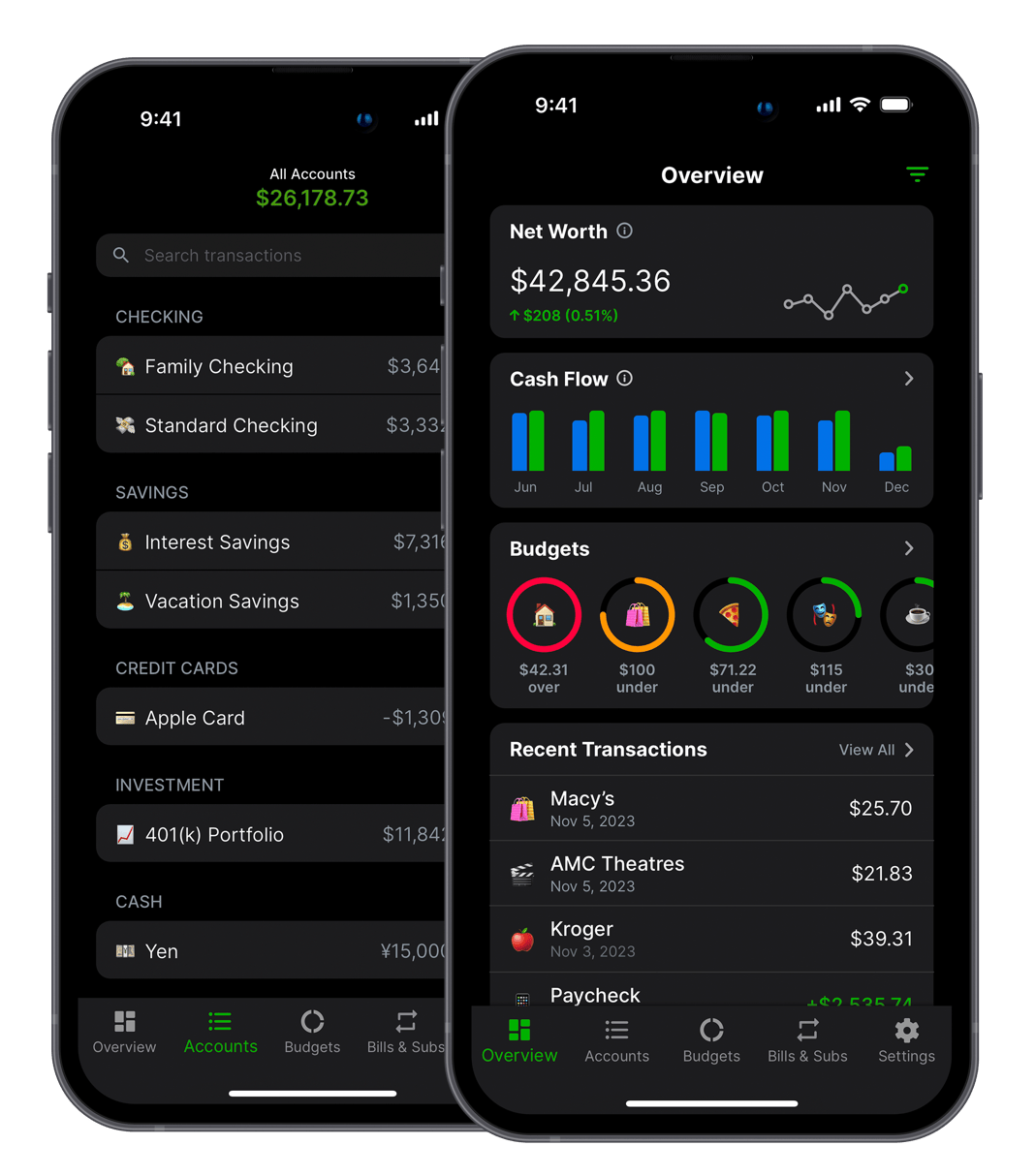
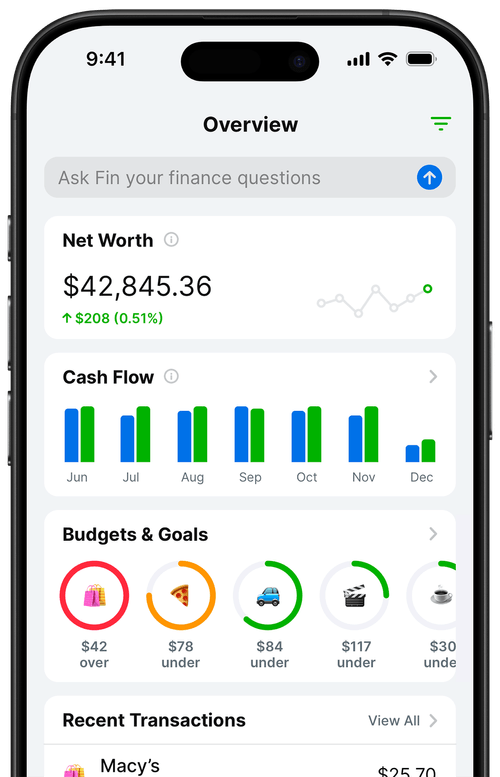
Year one I tracked nothing. Year two I tried a spreadsheet, which lasted until April when I had to reconstruct nine months from credit card statements. Year three I built the system below in Balance Pro and it has just kept running.
The setup:
- One expense category called "Dev Tools." Every recurring software subscription, hosting bill, SDK fee, and platform fee gets tagged here. By December I have a clean list to hand to my accountant.
- One category called "Hardware." Anything I'd depreciate or Section 179 goes here, separate from monthly subscriptions.
- One category called "Professional Services" for the accountant, the lawyer, conference tickets, and educational subscriptions.
- A "Tax Reserve" savings goal set at 28 percent of revenue. Balance Pro tracks the goal balance against each quarterly due date so I know whether I'm on pace.
- A monthly five-minute review on the last day of each month. I scan the categories, confirm everything is tagged, and check the tax reserve balance.
That's the entire system. The work isn't the tracking, it's setting up the categories once and then tagging deposits and expenses as they happen. By tax time I export a category report, hand it to my accountant, and the whole thing takes a fraction of the time it used to.
The five mistakes I made year one
None of these are unique. I have heard versions of all five from other indie developers I've talked to. They are the default failure modes for someone running an app business solo, and each one costs real money.
1. Spending the gross payout
An $8,000 App Store deposit hit my account and I treated it as $8,000. The IRS treated it as roughly $5,200 of mine and $2,800 of theirs. I learned this in April when I owed $11,000 and had less than half of that available. Cost: roughly $1,400 in late-payment penalties and interest.
2. Skipping quarterly payments because "I'd just pay it all in April"
The IRS doesn't accept that arrangement. Underpayment penalties apply per quarter, and they compound. I owed all four quarters in penalty form when I filed. Cost: about $600 in penalties for that first year.
3. Not tracking small recurring subscriptions
The $9 here, $14 there, $29 a month for a service I forgot I signed up for. Across a year these add up to four-figure amounts that are fully deductible if you tracked them and worth nothing if you didn't. I missed roughly $1,800 in deductible subscriptions year one because they were buried in credit card statements I never categorized. Cost: about $540 in tax savings I left on the table.
4. Mixing personal and business accounts
Every app payout, freelance check, and personal expense ran through the same checking account. When I tried to figure out my actual business income for the year, I had to manually sort hundreds of transactions. The accountant's hourly rate is not a fun multiplier on that work. Cost: roughly $400 in extra accountant fees and a weekend of my life. I wrote the complete walkthrough for avoiding this in how to separate personal and business finances as a solo app developer.
5. Skipping the home office deduction because "it might trigger an audit"
This one is a myth that has somehow refused to die. The home office deduction is fully legitimate when you qualify, and the IRS does not flag returns just because someone took it. I worked from a dedicated room in my apartment for the entire year and didn't claim a dollar of it. Cost: about $1,800 in deductions I qualified for and skipped out of unnecessary fear.
Total damage from year one: somewhere between $4,500 and $5,000 in penalties, missed deductions, and accountant overage. None of it was strictly necessary. All of it was preventable with two hours of setup at the start of the year.
What should you actually do this week?
If you're a year-one indie developer reading this in May, here's the short version of what to do today:
- Open a separate business checking account if you don't have one. Even a free one at a different bank is fine.
- Move 28 percent of every App Store and Play Store payout to a separate savings account labeled "Tax Reserve" the moment it lands.
- Calculate your Q2 estimated tax payment using IRS Form 1040-ES or have an accountant do it. Pay it by June 15.
- Set up expense categories for Dev Tools, Hardware, and Professional Services in your tracking app of choice.
- Schedule a 30-minute call with a CPA who works with self-employed software people. The fee is deductible. The advice is worth multiples of the fee.
Year one is the hardest because you're learning a new system at the same time you're trying to ship apps. By year two, the categories are set up, safe harbor protects you from quarterly penalties, and the tax reserve is on autopilot. You stop dreading April and start treating taxes as background overhead. That's the goal: not loving your taxes, just not being terrified of them.
Final reminder, because it bears repeating: I'm a developer, not a CPA. This article reflects my experience and the rules as I understand them. Your situation is yours. Get a professional involved before you make decisions with real dollars on the line.
For more on the tax side specifically, these are worth a read:
- How much to set aside for taxes as a freelancer
- What happens if you miss a quarterly estimated tax payment
- 1099 tax deductions for the self-employed
Frequently Asked Questions
How much should an indie app developer set aside for taxes?
A reasonable starting point is 25 to 35 percent of every payout. Indie developers in the US owe self-employment tax (15.3 percent), federal income tax, and state income tax in most states. Setting aside 28 to 30 percent the moment a payout arrives is a defensible default until a CPA gives you a more precise number.
Do solo app developers have to pay quarterly estimated taxes?
In most cases, yes. The IRS requires quarterly estimated payments if you expect to owe at least $1,000 in federal taxes for the year and your income isn't subject to withholding. App revenue isn't withheld, so most indie developers cross the threshold quickly. Payments are due April 15, June 15, September 15, and January 15.
Is the Apple Developer Program fee tax deductible?
Yes. The $99 annual Apple Developer Program membership is an ordinary and necessary business expense for an app developer and is fully deductible on Schedule C. The $25 one-time Google Play developer fee is also deductible. Track both in a dedicated platform fees expense category.
Can I deduct my MacBook if I use it for app development?
Yes. A computer used for app development is deductible. You can either deduct the full cost in the year of purchase using Section 179 (subject to limits) or depreciate it over five years using MACRS. If you use the device partly for personal purposes, you can only deduct the business-use percentage.
What home office deduction can a solo app developer take?
If you have a dedicated space used regularly and exclusively for app development, you can claim a home office deduction. The simplified method allows $5 per square foot up to 300 square feet, capped at $1,500. The actual expense method lets you deduct a percentage of rent, utilities, and home insurance based on the office's share of total square footage.