


Key takeaways
- The fastest repayment path combines knowing your exact loan terms with making consistent extra principal payments, even modest ones.
- Refinancing can lower your interest rate but permanently removes federal protections like income-driven repayment and loan forgiveness eligibility.
- Income-driven repayment reduces monthly payment pressure but usually increases total interest paid unless you qualify for forgiveness.
- Side income earmarked directly for loan principal is one of the most reliable ways to cut years off your repayment timeline.
- A budget grounded in actual spending data makes it easier to find the cash for extra payments without resorting to guesswork.
If you have student loans, you have probably done the math on what it would take to pay them off faster and then wondered whether any of it is actually realistic. The honest answer is: some of it is, and some of it is noise. This guide walks through the strategies that genuinely work for paying off student loans faster, the tradeoffs each one carries, and how to figure out which approach fits your specific situation.
Why student loans stay sticky for so long
Student loans linger because of how interest compounds on a fixed monthly payment. When you make the minimum payment, a portion goes to interest first and the rest goes to principal. Early in the loan, that split often favors interest. This means your actual balance shrinks slowly at the start, which is demoralizing and makes it easy to deprioritize the debt.
The other factor is lifestyle inflation. Most people graduate, start earning more than they did as students, and immediately absorb that extra income into a higher standard of living. The loan payment stays the same, and there is never a surplus to put toward principal. Breaking that pattern is mostly a budget problem, not an income problem.
How to understand your repayment options before choosing one
Before you can choose a strategy, you need to know exactly what you owe: total balance, interest rates on each loan, servicer contact information, and whether your loans are federal or private. Federal and private loans have different rules, different protections, and different options available to you.
For federal loans, the main repayment options are:
- Standard repayment: Fixed payments over 10 years. This is the fastest standard path and results in the least total interest paid.
- Graduated repayment: Payments start low and increase every two years over 10 years. Works if you expect income to grow, but you pay more interest total than on the standard plan.
- Income-driven repayment (IDR): Payments capped at a percentage of discretionary income, typically 5 to 10 percent depending on the specific plan. Useful if your income is low relative to your debt load, or if you are working toward Public Service Loan Forgiveness (PSLF).
- Extended repayment: Stretches payments to 25 years. Dramatically reduces monthly payment but substantially increases total interest paid. Avoid it unless cash flow is genuinely unmanageable on any other plan.
The right starting point for most borrowers is the standard 10-year plan. If the monthly payment is unworkable, income-driven repayment is a legitimate safety valve, not a failure. Just go in knowing that unless you reach forgiveness, IDR usually means paying more interest over the life of the loan.
How to pay off student loans faster with extra payments
Extra payments are the simplest and most reliable lever for paying off student loans faster. The key is directing extra payments to principal only, not toward your next scheduled payment. When you make an extra payment, contact your servicer or use their online portal to specify that the funds should reduce principal on your highest-interest loan. If you do not specify this, servicers often apply extra payments as an advance on your next due date, which does not reduce your balance the way you intend.
A few approaches that work in practice:
- Debt avalanche: Make minimum payments on all loans, then put every extra dollar toward the loan with the highest interest rate. Mathematically optimal for reducing total interest paid.
- Debt snowball: Target the smallest loan balance first regardless of rate. Slower in pure math terms, but paying off an entire loan creates momentum that keeps people going. Both approaches work if you stick with them.
- Round up your payment: If your required payment is $387 per month, pay $400 or $450. The difference seems small, but consistent rounding adds up to months or years cut from your term.
- Apply windfalls directly to principal: Tax refunds, annual bonuses, gifts, and freelance payments are all candidates. A $1,500 tax refund applied to principal in year two of a $30,000 loan saves a meaningful amount of interest over the remaining term.
What you are doing with extra payments is shifting more of each subsequent scheduled payment toward principal, which accelerates the entire amortization schedule. The earlier in the loan you make extra payments, the more impact they have.
How refinancing can speed up payoff (and when to skip it)
Refinancing means taking out a new loan, typically with a private lender, to replace your existing loans. If you qualify for a lower interest rate, refinancing reduces the amount of each payment that goes to interest, which means more goes to principal with every payment you make. That difference can be substantial over a 10-year term.
The catch is that refinancing federal loans with a private lender permanently removes federal protections. You lose access to income-driven repayment, PSLF eligibility, federal forbearance options, and any future forgiveness programs. Once you refinance into a private loan, there is no going back.
Refinancing makes the most sense if:
- You have a stable, high income and are confident you will not need income-driven repayment or forgiveness
- You qualify for a meaningfully lower interest rate (at minimum a one percentage point reduction is worth evaluating)
- Your loans are entirely private already, in which case you lose nothing federally by refinancing
Refinancing makes less sense if you work in public service, if your income is variable or uncertain, or if your existing rate is already competitive. Federal loan consolidation, which is different from refinancing, keeps all federal benefits intact but does not lower your interest rate. It simplifies multiple loans into one payment, which is useful if managing several servicers is creating confusion.
How side income changes your payoff math
Adding a side income stream and routing the proceeds directly to loan principal is one of the most effective ways to pay off student loans faster. The reason it works where other strategies stall is that it does not require cutting current spending. You are adding money to the equation instead of redistributing what is already there.
The key word is "routing." If side income lands in your checking account and gets absorbed into general spending, it does not help. You need a system where that money has a designated destination before it arrives. A separate savings account labeled for loan payoff, or an automatic transfer triggered when freelance payments clear, both work.
Realistic side income options that fit around a full-time job:
- Freelancing in your existing skill set: Writing, design, development, accounting, tutoring. Platforms like Upwork or direct referrals from your professional network. Rates are better through referrals, but platforms reduce the friction of finding clients when starting out.
- Teaching or tutoring: If you have a subject-matter background, tutoring through platforms like Wyzant or independently can pay well for a few hours per week. Demand for test prep tutoring and academic subjects is consistent.
- Selling expertise asynchronously: Courses, templates, or written guides on platforms like Gumroad. Upfront time investment with passive income potential afterward. Not fast, but worthwhile if you have relevant knowledge and a bit of time to package it.
- Delivery and rideshare: Flexible, no prerequisite skills, income starts immediately. Hourly rates after expenses are lower than skilled freelancing, but it is a reliable option if your schedule and location allow it.
Even a few hundred dollars per month routed directly to principal can cut one to three years off a standard 10-year repayment term, depending on your balance and rate. The math is straightforward and worth running with your own numbers before deciding whether it is worth the time investment.
How to use your budget to find extra payment money
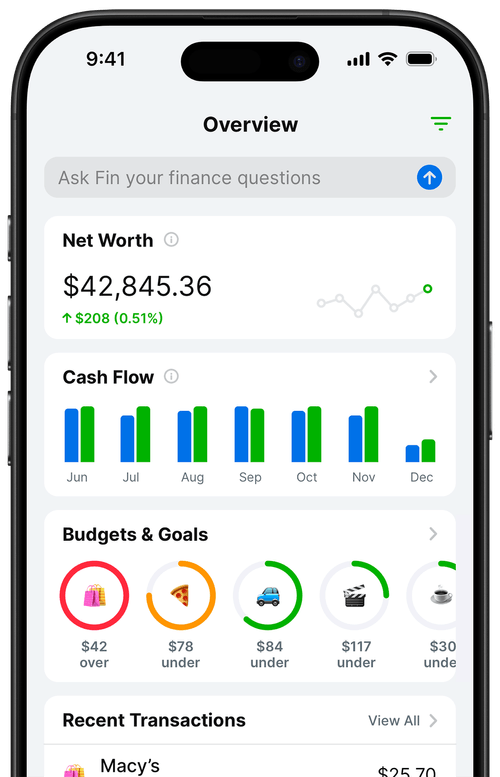
Most people underestimate how much they could realistically redirect toward loan payments if they had clear visibility into their spending. The problem is that most people do not have that visibility. They have a rough sense of their big fixed expenses and a vague feeling that the rest is "normal," without knowing what normal actually costs them each month.
Getting specific changes the picture. When you can see that you spent $340 on dining out last month, $180 on subscriptions, and $210 on impulse purchases, those become real numbers you can make decisions about. Cutting dining out by half and canceling unused subscriptions might free up $250 or more per month. Over a year, that is $3,000 applied to loan principal.
The two categories most worth auditing first:
- Subscriptions: Most people are carrying subscriptions they have forgotten about or no longer use. A monthly audit of recurring charges surfaces these quickly.
- Discretionary food spending: Dining, coffee, and food delivery combined are often the largest discretionary category and the most elastic. You do not need to eliminate it, just put a number on it and set a target.
The goal is not austerity. Cutting everything makes the approach unsustainable within a few months. The goal is identifying one or two categories where you would genuinely rather have the money applied to loan payoff than spent the way it currently is. That framing makes the tradeoff feel like a choice rather than a restriction.
Tax benefits worth knowing about
Two tax provisions are directly relevant to student loan borrowers and worth understanding before you file.
The student loan interest deduction allows you to deduct up to $2,500 per year in interest paid on qualified student loans. You do not need to itemize to claim it. The deduction phases out for single filers with adjusted gross income between $75,000 and $90,000, and for married filing jointly between $155,000 and $185,000. If your income is below those thresholds, this deduction is automatic and meaningful.
If your employer offers a student loan repayment benefit, that is worth investigating. Under current law, employers can contribute up to $5,250 per year toward employee student loan balances on a tax-free basis. Not every employer offers this, but enough do that it is worth asking about during open enrollment or when negotiating a new position.
For anyone pursuing PSLF, the important thing to know is that you need to be enrolled in an income-driven repayment plan and making 120 qualifying payments while working full-time for a qualifying employer. PSLF is not a fast path, it takes at least 10 years, but for borrowers with high debt relative to income working in eligible fields, it can result in significant forgiveness. Track your progress carefully and submit employer certification forms annually rather than waiting until year 10 to verify eligibility.
Frequently Asked Questions
What is the fastest way to pay off student loans?
The fastest method is making extra principal payments consistently, especially early in the loan term when they have the most impact on your amortization schedule. Combining extra payments with refinancing to a lower rate, if you qualify and do not need federal protections, can shorten the timeline further. The avalanche method (targeting the highest-rate loan first) is the mathematically optimal ordering.
Does paying extra on student loans reduce interest?
Yes, directly. Extra payments reduce the principal balance, which is the amount on which interest accrues. A lower balance means less interest accumulates each month, which means a larger share of your scheduled payments go to principal going forward. Over a 10-year term, consistent extra payments can save thousands of dollars in total interest.
Is it better to refinance or consolidate student loans?
Federal consolidation preserves all federal loan benefits (income-driven repayment, PSLF eligibility, forbearance) but does not lower your interest rate. Refinancing with a private lender can lower your rate but permanently eliminates federal protections. If you plan to pursue forgiveness or need flexibility on payments, consolidate. If you have stable income, no forgiveness path, and qualify for a significantly lower rate, refinancing is worth evaluating.
What is income-driven repayment and should I use it?
Income-driven repayment caps monthly payments at a percentage of your discretionary income, typically 5 to 10 percent depending on the plan. Use it if your payment under a standard plan is genuinely unaffordable, or if you are pursuing loan forgiveness through PSLF or IDR forgiveness after 20 to 25 years. If your income can support standard payments, IDR will usually cost you more in total interest over time.
Are there penalties for paying off student loans early?
Federal student loans have no prepayment penalties. For private loans, check your loan agreement before making large extra payments, since some private lenders do charge them. Most private lenders have moved away from prepayment penalties in recent years, but it is worth confirming before you send a large lump sum.
How much can I deduct for student loan interest on my taxes?
You can deduct up to $2,500 in student loan interest per year without itemizing. The deduction phases out for single filers with adjusted gross income between $75,000 and $90,000, and for married filing jointly between $155,000 and $185,000. Above those thresholds, the deduction is not available.