


Key takeaways
- Before you invest a dollar, you need a clear picture of your monthly cash flow and at least a small emergency fund.
- Index funds that track broad markets are the most reliable starting point for most beginners, at low cost and low maintenance.
- Dollar-cost averaging, investing a fixed amount on a regular schedule, removes the pressure of trying to time the market.
- Your account type (Roth IRA, 401(k), taxable brokerage) matters as much as what you invest in.
- Patience is not optional. The compounding that makes investing worthwhile takes years to become visible.
Learning how to start investing for beginners usually involves wading through dense jargon before anyone tells you what actually matters. The short version: invest consistently, keep costs low, diversify across many assets, and give it time. That is most of what the research supports. The longer version, which covers the decisions you will actually face, is below.
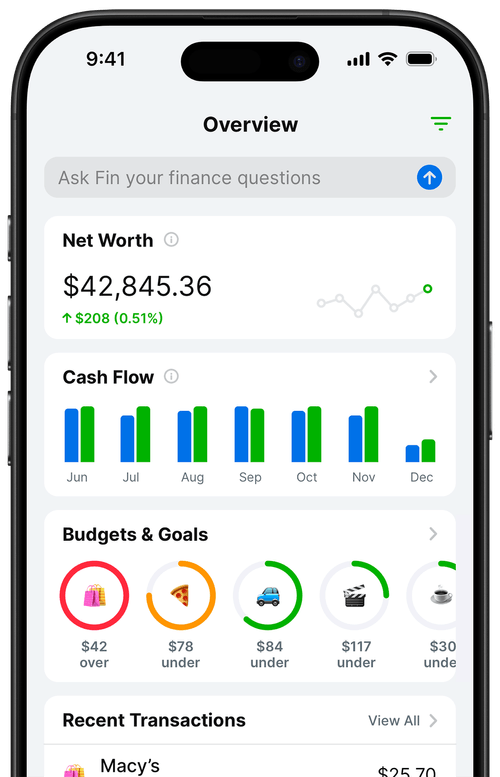
One thing worth flagging upfront: investing is a separate discipline from budgeting and expense tracking, but the two are tightly connected. You cannot invest consistently if you do not know how much you can afford to invest each month. Getting clarity on your cash flow is step one, before you open a brokerage account.
Why invest at all?
Money sitting in a checking account loses purchasing power over time because of inflation. The average inflation rate in the US has hovered around 3 percent annually over the long run, which means $10,000 in cash today buys roughly $7,400 worth of goods in ten years. Investing is the mechanism most people use to outpace that erosion.
Beyond inflation protection, investing builds wealth through compounding. When your investments generate returns, those returns get reinvested and generate their own returns. A $5,000 investment earning 7 percent annually becomes roughly $9,800 in ten years and about $19,300 in twenty years, without adding another dollar. That multiplication is not magic; it is just time doing its work.
The goal of an investment strategy is not to get rich quickly. It is to grow wealth steadily toward specific financial goals: retirement, a house down payment, a child's education, or financial independence. Knowing which goal you are working toward shapes every decision that follows.
How do you build a financial foundation before investing?
Most financial planners suggest a specific order of operations before putting money into the market. Skipping steps is common and usually costs people later.
Emergency fund first. Aim for three to six months of essential expenses in a high-yield savings account before investing anything beyond your employer's 401(k) match. Without this buffer, an unexpected car repair or medical bill forces you to sell investments at whatever price the market happens to be at that moment, which is often the worst time to sell.
Capture your employer match. If your employer matches 401(k) contributions up to, say, 4 percent of your salary, contributing at least that much is effectively a 100 percent immediate return on that portion. No investment in the market reliably beats that.
Pay down high-interest debt. Credit card interest rates typically run between 20 and 29 percent. The stock market has averaged roughly 7 to 10 percent annually over long periods. Paying off a 24 percent credit card balance is a guaranteed 24 percent return. That math makes debt payoff the higher priority for most people carrying balances above 8 or 9 percent interest.
Once those three boxes are checked, you are in a position to invest more broadly without the risk that a bad month derails your whole plan.
What investment options should beginners consider?
The investment landscape is wide, and not all of it is appropriate for someone starting out. Here is a plain-language breakdown of the main categories.
Index funds and ETFs
An index fund holds a slice of every company in a particular market index, like the S&P 500 or the total US stock market. Instead of betting on individual companies, you own a small piece of hundreds or thousands of them. Exchange-traded funds (ETFs) work similarly but trade throughout the day like individual stocks. Both options offer broad diversification at very low cost, with expense ratios often below 0.10 percent annually. This is where most investment experts suggest beginners start.
Individual stocks
Buying shares in individual companies means your returns depend entirely on how those specific companies perform. The upside is higher potential gains. The downside is concentrated risk: if the company underperforms, there is nothing else in the position to cushion the loss. Individual stock picking also requires ongoing research and attention that index fund investing does not. For most beginners, individual stocks are better added after building a solid index fund foundation, not before.
Bonds
Bonds are essentially loans you make to governments or corporations. They pay a fixed interest rate and return your principal at maturity. Bonds are less volatile than stocks and generate lower returns. Their primary role in a portfolio is to reduce overall volatility: when stocks fall sharply, bonds often hold steady or rise. How much bond exposure you want depends on your time horizon and how you respond emotionally to seeing your portfolio value drop.
Real estate
Direct real estate ownership requires significant capital, ongoing management, and illiquidity. Real estate investment trusts (REITs), available through most brokerages as stocks or funds, let you invest in real estate portfolios without owning property. They tend to pay higher dividends than typical stocks and provide some inflation protection, since property values and rents often rise with inflation.
Cryptocurrencies
Crypto assets like Bitcoin and Ethereum have produced enormous returns for early holders and enormous losses for latecomers buying near peaks. The volatility is genuine: assets that double in a year can lose 70 percent the next. Crypto is not an appropriate core holding for someone just learning how to start investing for beginners. If you want exposure, most advisors suggest keeping it to a small percentage of a diversified portfolio, somewhere between 2 and 5 percent at most, and only money you can afford to lose entirely.
How do investment account types affect your strategy?
You can buy the same index fund inside several different account types, and the account type determines how your gains are taxed. This is one of the most consequential decisions beginners overlook.
401(k) and 403(b): Employer-sponsored retirement accounts. Contributions reduce your taxable income today, and the investments grow tax-deferred until you withdraw in retirement. If your employer matches contributions, this is always the first place to invest. The 2025 contribution limit is $23,500 for most employees.
Roth IRA: Funded with after-tax dollars, but growth and qualified withdrawals are completely tax-free. This is particularly valuable if you expect to be in a higher tax bracket in retirement than you are now, which is often true for younger investors. The 2025 contribution limit is $7,000 per year (with income phase-outs starting around $150,000 for single filers).
Traditional IRA: Similar to a 401(k) in tax treatment. Contributions may be tax-deductible depending on your income and whether you have access to a workplace plan. Growth is tax-deferred.
Taxable brokerage account: No contribution limits, no tax advantages, full flexibility. You pay capital gains tax when you sell positions that have grown. This is where you invest once you have maxed out your tax-advantaged accounts, or when you need access to the money before retirement age.
The general priority for most beginners: 401(k) up to the match, then Roth IRA to the limit, then back to 401(k), then taxable brokerage.
What investment strategies work best for beginners?
Once you know what you can invest in and where, you need a plan for how you will do it. Three approaches consistently hold up under scrutiny for people starting out.
Dollar-cost averaging
Dollar-cost averaging means investing a fixed dollar amount at regular intervals, regardless of what the market is doing. If you invest $300 every month into an S&P 500 index fund, you buy more shares when prices are low and fewer when prices are high. Over time this smooths out volatility and removes the pressure of trying to judge when the market is cheap or expensive. It also builds the habit of investing consistently, which matters more than picking the perfect entry point.
Buy-and-hold
Buy-and-hold means purchasing a diversified set of assets and leaving them alone for years or decades. This strategy benefits from compounding, avoids transaction costs and taxes triggered by frequent trading, and sidesteps the psychological trap of panic-selling during market downturns. The research on long holding periods is consistent: investors who stay invested through volatility tend to significantly outperform those who try to time entries and exits.
The three-fund portfolio
A widely recommended approach for beginners is the three-fund portfolio: one US total market index fund, one international index fund, and one bond index fund. The allocation between them depends on your time horizon and risk tolerance, but a common starting point for someone in their 30s is 70 percent US stocks, 20 percent international stocks, and 10 percent bonds. This setup gives you global diversification with just three holdings and minimal complexity.
What to avoid
Active trading, where you frequently buy and sell in response to market news or price movements, is seductive and reliably destructive for most retail investors. Transaction costs accumulate, taxes on short-term gains are higher than on long-term gains, and human timing instincts tend to be wrong at exactly the wrong moments. Research from Dalbar consistently shows that the average equity fund investor earns significantly less than the funds they invest in, largely due to buying and selling at the wrong times.
How does risk tolerance shape your approach?
Risk tolerance is not just a personality trait. It is also a function of your time horizon. If you are 28 years old investing for retirement at 65, you have 37 years to ride out market downturns. A portfolio that drops 30 percent in a recession will very likely recover fully before you need the money. If you are 58 and retiring in seven years, a 30 percent drop is a much more serious problem.
Beyond time horizon, honest self-assessment matters. Some people look at a 20 percent portfolio drop and feel nothing, continuing to invest as planned. Others feel panic and sell at exactly the wrong time. There is no shame in the second category; it is just useful information. If market volatility genuinely disturbs your sleep, a more conservative allocation with a larger bond component is the right choice for you, even if the expected long-term return is slightly lower. A strategy you can stick with through bad years beats an aggressive strategy you abandon at the first correction.
A simple rule of thumb for allocation: subtract your age from 110 to get your approximate stock percentage. A 35-year-old would hold around 75 percent stocks. Adjust up if you have a high tolerance for volatility, or down if you have a low one.
Why does patience matter more than picking the right stock?
The most consequential investing decision most beginners make is not which fund to buy; it is whether they stay invested through difficult stretches. Market downturns feel permanent when you are inside them. Every major recession in US history, including those following the dot-com bust, the 2008 financial crisis, and the 2020 pandemic crash, was eventually followed by new market highs. The investors who benefited from those recoveries were the ones who did not sell during the panic.
Time in the market consistently beats timing the market. A study by Charles Schwab found that a hypothetical investor who put money to work immediately, regardless of market conditions, outperformed even a perfect market timer over a 20-year period in most scenarios. The cost of waiting for the "right" moment to invest typically exceeds any benefit from better timing.
This does not mean you never rebalance. As one asset class grows faster than others, your allocation drifts away from your target. Rebalancing once a year, or when any position drifts more than 5 percentage points from target, keeps your risk level where you intended it without requiring constant attention.
One practical frame: treat your investment contributions like a bill that gets paid before anything else. Automate the transfer on payday so the decision does not require willpower each month. The investors who build the most wealth over time are rarely the ones with the best stock picks. They are the ones who invested consistently for decades without stopping.
Frequently Asked Questions
How much money do I need to start investing?
You can start with as little as $1 through fractional shares or index fund ETFs on most major brokerages. The more useful question is whether your monthly cash flow is stable enough to invest consistently, even in small amounts. A hundred dollars a month invested reliably for twenty years builds far more wealth than a larger one-time deposit that never gets added to.
What is the simplest investment strategy for beginners?
Dollar-cost averaging into a broad index fund, such as one that tracks the S&P 500, is the simplest and most well-supported starting point. You invest a fixed amount on a set schedule regardless of market conditions. This removes the temptation to time the market and builds the habit of consistent investing.
Should I pay off debt before investing?
Generally yes for high-interest debt like credit cards, where rates typically exceed 20 percent. At minimum, capture any employer 401(k) match first since that is an immediate 50 to 100 percent return on that portion. Then prioritize paying down debt above 8 or 9 percent interest before putting more into the market.
What is the rule of 100 in investing?
The rule of 100 suggests subtracting your age from 100 to get the percentage of your portfolio to hold in stocks. A 30-year-old would hold roughly 70 percent stocks and 30 percent bonds. Many advisors now use 110 or 120 as the starting number, since longer life expectancies mean more time to recover from market volatility.
What is the difference between active and passive investing?
Active investing means frequently buying and selling assets in an attempt to outperform the market. Passive investing means buying and holding a diversified fund that tracks a market index. Decades of research show that most active investors underperform comparable passive index funds after accounting for fees and taxes.
How does dollar-cost averaging work?
Dollar-cost averaging means investing a fixed dollar amount at regular intervals, regardless of price. When prices are low, your fixed amount buys more shares. When prices are high, it buys fewer. Over time this smooths out the impact of market volatility and avoids the trap of trying to find the perfect entry point.