

Key takeaways
- Month one is pure observation. The shock isn't where the money is going, it's how wrong people are about how much is leaving each category.
- By month three her patterns were visible: $47 a month in forgotten subscriptions, $312 a month on food she didn't remember enjoying, $89 a month on impulse purchases under $20.
- Behavior change showed up in month four or five, not month one. Visibility quietly shifts choices before you notice the choices are shifting.
- By month six she'd saved $1,840 against her starting baseline without consciously cutting anything she cared about. The biggest wins were the categories she'd never have guessed.
- The work is real but small: 15 minutes a week of tagging transactions, plus a 5-minute Monday look at the dashboard.
A friend of mine, who I'll call Maya, decided last fall to spend six months tracking every dollar she earned and spent. She's a marketing manager in her early thirties, makes a fine living, isn't in debt, and had the same vague sense most of us walk around with: that her money was probably going where she thought it was. Her system before the experiment was the one most people use. Glance at the checking account balance every Friday. Feel mildly anxious if the number was lower than expected. Move on.
The problem with that system, as she put it when we sat down with her data, is that it tells you a single number with no context. It tells you there's less money than there used to be. It does not tell you why.
What follows is the chronicle of what changed when she started tagging every transaction the day it cleared. With her permission, I'm sharing the dollar amounts and the patterns she saw, because they're some of the clearest examples I've come across of what tracking actually does to a person's finances over time. The honest answer to "is tracking every dollar worth it" is yes, but for reasons that are easier to see in someone else's data than in your own.
Month one: the shock isn't where the money is going
Going in, Maya assumed the surprise would be a single category she was overspending in. The reality was different. The surprise was that almost every category was off from her mental model, often by 30 to 50 percent.
Her internal estimates for monthly spending versus the actual numbers from month one of tracking:
| Category | What she thought | What actually was |
|---|---|---|
| Groceries | $400 | $612 |
| Restaurants and takeout | $200 | $487 |
| Coffee out | $50 | $118 |
| Subscriptions | $80 | $163 |
| Rideshare | $60 | $144 |
| Random Amazon | $100 | $298 |
Add it up. She had estimated her monthly variable spending at roughly $890. The real number was $1,822. She was wrong by more than 100 percent.
The thing that surprised her wasn't any one of those numbers. It was that she'd convinced herself she knew where her money was going while being off by a factor of two. If you'd asked her a week earlier what she spent on takeout in an average month, she would have said "around two hundred bucks, I think," with confidence. The actual number was $487. She had no idea, and her best guess about it had been quietly wrong for years.
Month one was almost entirely observation. She tagged every transaction and tried not to make changes. No budget. No cuts. Just an honest first look at the real picture before reacting to it. The numbers above are what showed up.
Month two: the first quiet adjustments
Month two is where the experiment got interesting. Maya hadn't set any rules for herself, but tagging every transaction had a side effect she didn't expect. When you have to actively categorize a $14 burrito the same day you bought it, the burrito feels different. Not in a guilt way, she told me. In a "do I actually want this enough to log it" way.
Month two restaurant and takeout spending dropped from $487 to $362. She didn't decide to spend less. She just kept hesitating in front of the takeout app for an extra ten seconds, and a meaningful percentage of those hesitations ended in cooking instead of ordering.
The same thing happened with rideshare. $144 to $97. She started looking at the price screen for a beat longer and choosing the bus or a walk for the trips that didn't actually need a car. None of these were big sacrifices. They were tiny corrections that wouldn't have happened without the tagging step in the loop.
Maya was honest about something else worth noting. She'd expected tracking to feel like a chore, the kind of self-improvement project she'd abandon by week three. It didn't. Or, more accurately, it felt mildly tedious for the first ten days, and then it stopped. By the end of week three, tagging a transaction took her about four seconds and she did it the same way she checked the weather, without thinking about whether she felt like it.
Month three: the patterns get embarrassing
Month three is where the visible patterns started making her wince, in her words. Two stuck out.
The forgotten subscription pile. She sat down on a Saturday morning and went through three months of "Subscriptions" tagged transactions. She was paying for a meditation app she hadn't opened in a year. A photo storage service she'd duplicated by switching to iCloud. A premium tier of a writing tool she never upgraded but evidently never canceled. A streaming bundle she forgot included a service she already paid for separately. Total: $47 a month, every month, going to things she either didn't use or was paying for twice.
Forty-seven dollars a month is $564 a year. Forty-seven dollars a month for a decade is over $5,600 in money she had been actively setting on fire because nobody had ever asked her to look. She canceled six things in one sitting that afternoon.
The "small" purchase pattern. She sorted three months of transactions by amount and looked at the under-$20 cluster. The story there was specific: a $9 Kindle book on Tuesday, a $14 lunch from the place down the block on Wednesday, a $7 cold brew on Thursday, a $12 Bluetooth cable from Amazon because the old one was somewhere in a drawer she didn't want to look in. Each transaction looked like nothing. Aggregated, the under-$20 category was $389 a month. Almost $400 in invisible micro-spending.
This was the most uncomfortable finding of the entire six months. She could have told you exactly what each $400 trip to the grocery store felt like. She had zero memory of where the $389 of micro-spending went. Most of it wasn't even pleasant. A lot of it was friction-removing convenience: an Amazon order to avoid driving to a store, a takeout meal to avoid cooking after a long day, a cold brew to avoid being slightly too tired in the afternoon. Useful. But not memorable, and not worth $400 a month if she'd been asked directly.
Month four: the boring middle
The most underrated part of any habit change is the boring middle. Month four was that for Maya. The novelty of tracking had worn off. The big subscription cuts had already happened. The numbers were stabilizing into a new baseline.
What she noticed in month four was that some categories had quietly continued to drop without her trying. Restaurants from $362 to $304. Coffee out from $118 to $76. Rideshare from $97 to $71. None of these were the result of conscious cuts in month four. They were the cumulative effect of having hesitated a few seconds longer at every decision point for three months running.
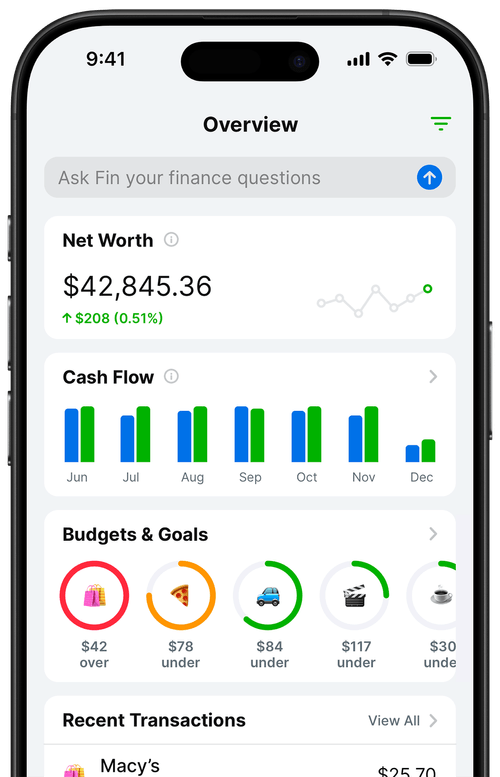
Month four was also when she started to enjoy the dashboard, which sounds odd but is what she said. The trend line on her "Cash Flow" chart had stopped looking like a horror movie. It was clean and stable. There was a buffer at the end of every month that hadn't existed before. She started looking at it the way you'd look at a good dashboard at work, she told me, not because anything was wrong but because it felt like progress to glance at it.
If you're considering doing your own version of this and worried about willpower, this is the part nobody warns you about. The work isn't sustaining motivation for 180 days. The work is two weeks of tagging discipline and then the system runs itself, and the changes happen quietly in the background.
Month five: the behavior change that surprised her
The thing Maya genuinely didn't expect was that tracking changed how she thought about spending in categories she wasn't trying to optimize at all.
Two examples from month five. The first: she was looking at a $189 ceramic dinnerware set she'd been wanting for months. Pre-tracking, she would have probably bought it impulsively after thinking about it for two weeks. Mid-tracking, she noticed herself doing math in her head. The dinnerware was about 60 percent of her monthly grocery line. It was three months of saved restaurant spending. It was almost double a Patreon she'd been thinking about supporting. She bought the dinnerware. She loves it. But she bought it after consciously placing it against the rest of her spending instead of as an isolated $189 decision. That comparison was new.
The second: she declined a wedding invitation in another city that would have cost about $1,200 between flights, a hotel, and a gift. She would not have declined that wedding pre-tracking. She would have justified it as a one-time expense and figured it out. Instead, she looked at the trip cost in the context of three months of budget planning, talked to the friend honestly about why, and sent a generous gift. They're still close. She saved roughly $1,000 net.
This is the part of tracking that gets missed when people describe it as restrictive. It isn't, at least not in Maya's experience. It's the opposite. Spending was less stressful in month five than it was in month one, because she knew what she was doing in every direction. The dinnerware didn't feel like an indulgence. The skipped wedding didn't feel like a sacrifice. Both decisions were made with information.
Month six: the result
Six months in, we added it up together. Here's the comparison between her month-one baseline and month six, in the categories where the change was meaningful:
| Category | Month 1 | Month 6 | Monthly change |
|---|---|---|---|
| Groceries | $612 | $548 | −$64 |
| Restaurants and takeout | $487 | $281 | −$206 |
| Coffee out | $118 | $58 | −$60 |
| Subscriptions | $163 | $98 | −$65 |
| Rideshare | $144 | $67 | −$77 |
| Random Amazon | $298 | $184 | −$114 |
| Total monthly delta | −$586 | ||
Month six was $586 lower than month one in the categories she tracked. Not because she was depriving herself, and not because she'd set a strict budget. Because she'd been looking. Across six months, the cumulative savings against her starting baseline came out to roughly $1,840, factoring in the ramp from month one to month six.
That number could have been higher if she'd been aggressive. She wasn't. She bought the dinnerware. She went out with friends. She took a four-day trip to Portland in month four that she would have skipped if she'd been on a tight budget. The point of this experiment for her was never to spend less. It was to spend with intention. The $1,840 was a side effect, not the goal.
The result that surprised her most, the one she didn't expect going in, was that she stopped feeling background anxiety about money. The vague sense of "things are probably fine" got replaced by an actual picture, and the picture was better than she'd feared. Knowing exactly where the dollars went made the dollars feel less like a moving threat and more like a tool she controlled. That shift, more than the savings number, is what she said made the experiment worth it.
What did she actually do, mechanically?
The system was almost embarrassingly simple. There's no great trick here. I'm including the steps because every "I tried X for Y months" article I've ever read leaves them out and the absence is frustrating.
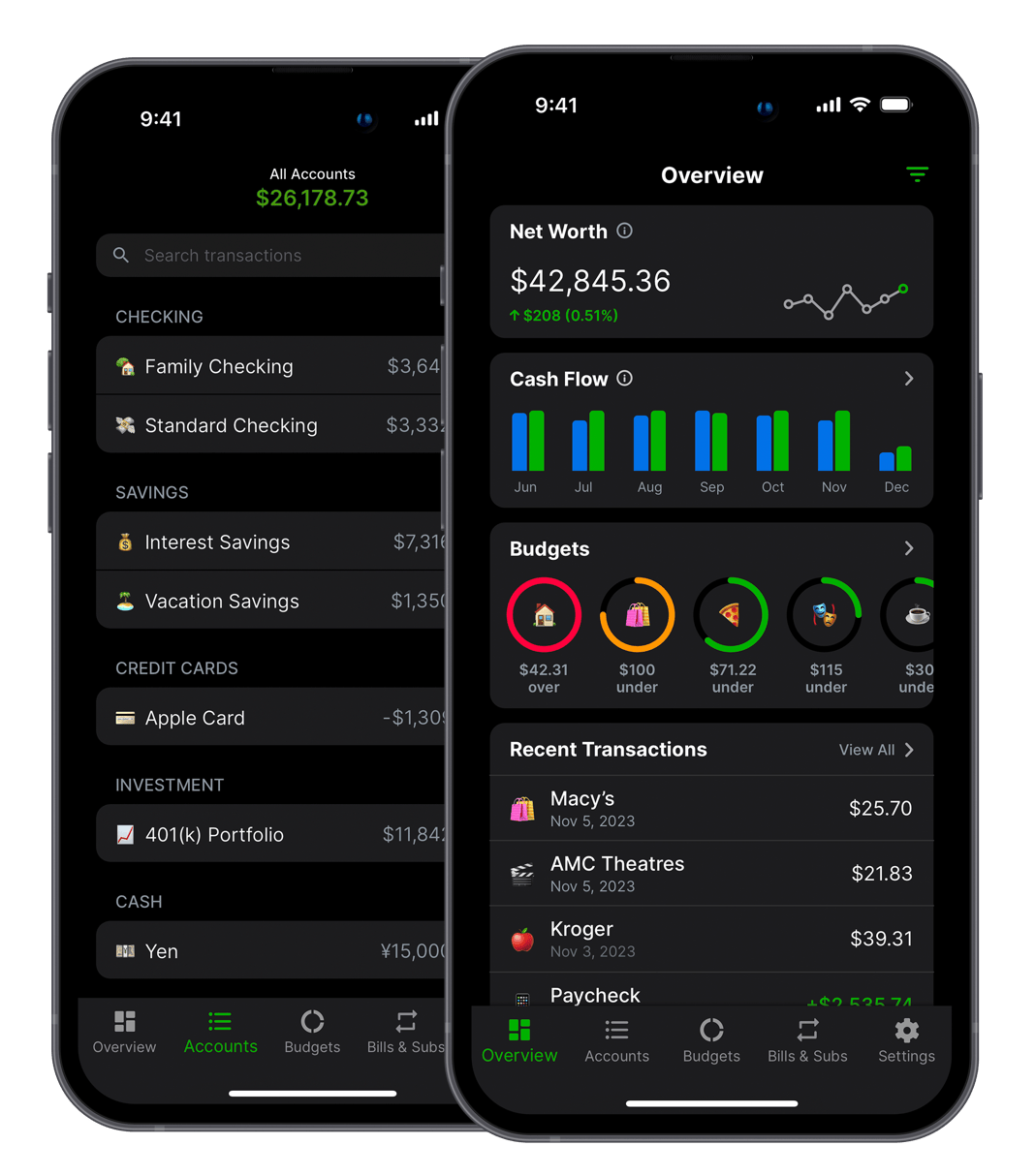
- Connected her main checking account, savings account, and credit card to a budgeting app. She used Balance Pro, which is part of how this experiment ended up in front of me. The same approach works in any tool that can show transactions sorted by category.
- Set up about a dozen spending categories roughly matching the table at the top of this article: Groceries, Restaurants, Coffee, Subscriptions, Rideshare, Travel, Personal, Health, Bills, and a catch-all for everything else.
- Tagged every transaction within 24 hours of it appearing. This was the only rule she gave herself. It took about four seconds per transaction once she got the rhythm.
- Looked at the category report every Monday morning for about five minutes. Sorted by amount. Scanned for anything weird. That was the entire weekly routine.
- Did a 30-minute review at the end of each month. Compared to the previous month. Wrote down anything she noticed. The "$47 in forgotten subscriptions" finding came out of one of these reviews.
Total time investment: about 15 to 20 minutes a week, mostly spread across the week in tiny tagging actions, plus a 30-minute review once a month. The financial return for her was somewhere between $200 and $400 a month by month six, which is a wildly favorable hourly rate compared to almost anything else she could have spent the time on.
Would she do it again? Should you?
Maya's answer was yes, with one caveat. The caveat is this: if you treat tracking as a moral exercise where you grade yourself harshly on every transaction, you will hate it and quit. The version that works is the one where tracking is information, not judgment. The data tells you the truth. What you do with the truth is up to you.
If you're considering doing your own version of this, two things are worth borrowing from her experiment. The first is to commit to thirty days, not six months. Six months is intimidating and abstract. Thirty days is concrete. By the end of thirty days you'll know whether the visibility helps you or stresses you out, and the answer for most people is the first one.
The second is to delay budgeting. Don't try to set spending limits in week one. The point of the first month is to see the real picture before reacting to it. If you set a budget on day one based on what you think you spend, you'll set it wrong and hate yourself for missing it. Track first. The budget, if you choose to set one, will be much better written by the data you collected than by your guess.
Six months after the experiment ended, Maya is still tracking. The novelty is long gone. It takes her about ten minutes a week now, plus a Monday morning glance at the dashboard. She isn't going to pretend it's the most exciting habit she's built. It's just one of the most useful. The dollars saved are real. The peace of mind is bigger than the dollars.
I came away from her data with the same conclusion I think most people reach when they actually look. If you've been telling yourself you have a handle on your spending, I'd gently bet you don't, and I'd say that with affection. Try thirty days. Look at the real picture. Decide what to do from there.
Frequently Asked Questions
What happens when you track every dollar you spend?
Tracking every dollar surfaces patterns you can't see in a single bank statement. Most people are surprised by their actual food spending, the size of their forgotten subscription bills, and how much micro-spending adds up over a month. The visibility itself starts changing behavior, and most categories drop 10 to 25 percent within 90 days without conscious cutting.
How long does it take for tracking to change spending habits?
Most people see their first behavior changes in month two. Month one is observation. By month three, patterns become obvious enough that you start avoiding the most wasteful categories without thinking about it. Real, durable habit change usually shows up around the four to five month mark.
How much money can you save by tracking your spending?
It varies, but a common range is 8 to 15 percent of monthly spending in the first six months without active budgeting. The biggest single win for most people is cutting forgotten subscriptions, which average $30 to $50 a month. Tracking is not budgeting, but visibility creates change on its own.
What's the easiest way to start tracking every dollar?
Connect one or two accounts to a budgeting app and commit to tagging every transaction within 24 hours. Don't try to set a budget yet. Track for the first month. By the end of 30 days you'll have enough information to know where the money is going, and any budget you decide to set will be much better calibrated to reality.
Is tracking every dollar worth the effort?
For most people, yes. The work is concentrated in the first two weeks. After that, tagging takes under five minutes a day, or 15 minutes once a week. The financial return for most people is between $50 and $200 a month in saved spending, plus a far better understanding of their finances. The hourly rate on the work is excellent.