


Key takeaways
- The cash envelope system divides your monthly spending budget into physical envelopes by category. When an envelope is empty, spending in that category stops.
- It works best on variable, discretionary spending: groceries, dining, entertainment, and personal care. Fixed bills belong in a separate digital system.
- Running out of cash in an envelope is not a failure. It is accurate data about where your budget needs adjustment.
- The core logic of the system, spending only up to a category limit you set in advance, translates cleanly to digital budgeting apps without requiring physical cash.
- Hybrid approaches are common and practical: use cash for high-temptation categories and track everything else digitally.
The cash envelope system is one of the oldest budgeting methods around, and it keeps coming back because the core idea is hard to argue with: you can only spend money you actually have in the envelope. If you have ever looked at your bank statement at the end of the month and wondered where your money went, the envelope system was designed specifically for that problem.
I want to give you an honest account of how it works, what it is genuinely good at, what its real limitations are, and how the underlying logic applies just as well to digital tools if carrying cash around does not fit your life.
How does the cash envelope system work?
The mechanics are simple. At the start of each month, you decide how much you plan to spend in each spending category: groceries, dining out, entertainment, clothing, personal care, and whatever else applies to your life. You then withdraw that total amount from your bank account in cash, divide it into labeled envelopes by category, and spend only from the corresponding envelope throughout the month.
When you buy groceries, you pay with cash from the groceries envelope. When you go out to eat, you pull from the dining envelope. The rule that makes the system work is the same one that makes it uncomfortable: when an envelope is empty, spending in that category stops until the next month.
That constraint is not a bug. It is the entire point.
Which spending categories work best with cash envelopes?
Not every expense belongs in a physical envelope. The system is most useful for discretionary, variable spending where overspending tends to happen gradually and invisibly. Good candidates include:
- Groceries (easy to let creep up without noticing)
- Dining out and coffee (high-frequency, high-temptation)
- Entertainment and hobbies
- Personal care and clothing
- Household supplies
- Gas or transportation (if you pay at a pump, this one requires a workaround)
Fixed expenses belong elsewhere. Rent, mortgage, car payments, insurance premiums, and subscription services are better handled via automatic bank transfer or bill pay. Trying to run those through physical envelopes adds friction without adding value, since those amounts do not vary and there is no behavioral temptation to manage.
How do I decide how much to put in each envelope?
This is where most people start with a guess and should not. Your first month's allocations should be based on what you have actually spent recently, not what you wish you spent.
Look at three months of bank and card statements, find your average per category, and use those numbers as your starting point. From there you can make intentional reductions: if you averaged $600 on dining out and want to pull that back, start at $450 rather than jumping to $200. Unrealistically low envelopes empty out in week two, kill your motivation, and tell you nothing useful about your real patterns.
Adjust envelope amounts monthly based on what you learned the previous month. This is an iterative process, not a one-time setup.
What should I do when an envelope runs out before the month ends?
Running out of envelope cash before the month ends happens to most people when they first start. The common impulse is to borrow from another envelope, and I would encourage you to resist it.
The reason borrowing defeats the system is that it lets you pretend the problem does not exist. An empty envelope is the best possible feedback: you have spent your planned amount for that category. That information is worth more than the short-term convenience of raiding your entertainment fund to cover groceries.
Instead, stop spending in that category for the rest of the month. Then ask yourself whether the envelope was too small for your actual needs or whether spending got away from you midway through. That answer tells you what to change next month. The discomfort of an empty envelope is the whole mechanism that changes behavior over time.
There is one reasonable exception: genuine emergencies. If the car needs a repair, it does not belong in your grocery envelope anyway. Irregular large expenses are best handled with a separate emergency or sinking fund, not covered by raiding your regular envelopes.
How do I handle online purchases with the cash envelope system?
This is the most common practical problem people run into, and it does not have a perfect answer. A few approaches work:
Dedicated debit card with a manual tally. Assign a debit card to online purchases in a given category, and keep a running total written directly on the envelope. Every time you make an online purchase, subtract it from the envelope's written balance. This works if you are disciplined about updating it immediately after each transaction.
Prepaid card or dedicated account. Load a prepaid card or a second checking account with the amount you budgeted for a category, and use that card exclusively for online spending in that category. When the balance hits zero, you stop. This is more mechanical and requires less willpower than the tally method.
Withdraw cash and immediately re-deposit an equivalent amount. Some people withdraw the full month's budget in cash, set aside what they will spend physically, and re-deposit the portion allocated for online spending, treating the act of re-deposit as mentally "assigning" those funds. This is admittedly awkward but maintains the psychological commitment of the system.
None of these is friction-free. This is a genuine limitation of the cash envelope method in an era where a large share of spending happens online or at contactless-payment terminals.
What are the real advantages of the cash envelope system?
The behavioral research on cash spending consistently finds that paying with physical money produces more careful, deliberate spending decisions than paying with cards. There is a measurable psychological cost to handing over bills that does not exist when you tap a card. If you have struggled with overspending in specific categories, that friction is the asset the envelope system is selling.
Beyond the spending psychology, the system delivers a few other concrete benefits:
- No math required mid-month. You can see your remaining balance at a glance by counting what is left in the envelope.
- Zero way to accidentally exceed a category limit. You can only spend what is physically there.
- Leftover cash accumulates naturally. Months where you come in under budget leave you with a visible surplus, which you can deliberately redirect to savings or a specific goal.
- Low setup cost. All you need are envelopes, cash, and a budget. No app required, no bank integration, no subscription.
What are the real disadvantages?
The envelope system has genuine limitations that are worth naming plainly rather than glossing over.
Carrying cash is inconvenient and carries risk. Physical cash can be lost or stolen and is not recoverable the way a card transaction can be disputed. Keeping several hundred dollars split across envelopes in a wallet is not how most people move through the world.
It does not fit modern payment infrastructure. Many transit systems, parking garages, airline check-ins, and online retailers require electronic payment. A cash-only system requires a parallel tracking system for those transactions, which is extra work.
No paper trail. Cash transactions do not appear in your bank statement. If you are not manually recording purchases, your spending history disappears. This makes it harder to identify patterns or remember what you spent $40 on in week three.
You miss card rewards. If you would otherwise be earning airline miles, hotel points, or cashback on purchases, switching to cash has a real opportunity cost. For someone putting $2,000 per month in card-eligible expenses, that can represent $40 to $60 in cashback foregone each month.
It does not address the root cause if the problem is the wrong budget numbers. The envelope system enforces whatever limits you set. If you set limits that are unrealistic, or if your spending problem is genuinely about earning too little rather than spending too much, the envelopes will run out without solving anything structural.
Can I get the same benefits with a digital budgeting approach?
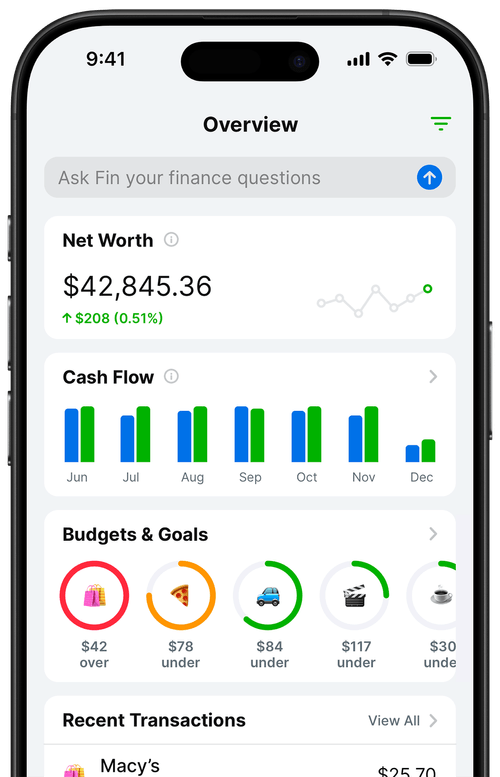
Yes, mostly. The core logic of the cash envelope system is category-based spending limits set before the month begins, with a hard stop when the limit is reached. A budgeting app that tracks spending by category and shows you your remaining balance in real time replicates most of that without the physical cash requirement.
What you give up is the behavioral friction of handing over physical money. What you gain is the ability to track card and online transactions seamlessly, maintain a spending history, and run the same logic across all your spending rather than just the categories where you use cash.
A practical hybrid that a lot of people land on: keep cash envelopes for one or two categories where you know your spending consistently slips, and run the rest of your budget through a digital tracker. This captures the behavioral benefit of cash where it matters most while eliminating most of the inconvenience.
Balance Pro handles this well if you want a digital layer on top: you set category budgets from your actual spending history, then track against those limits in real time throughout the month. It works with or without bank account connection, so privacy-conscious users can enter transactions manually just like marking off a cash purchase on an envelope.
Tips for actually sticking with the cash envelope system
Most people who try the envelope system and quit do so in the first six to eight weeks, before the habit has set in. A few things that help:
- Start with two or three categories, not ten. Pick the spending areas that cause the most friction or surprise in your month. Grocery and dining out are the most common starting points. Add more categories in month two if the first ones are working.
- Do the budget refill on the same day every month. The ritual of withdrawing cash and filling envelopes is part of what makes the system work. Build it into a consistent schedule, such as the first Saturday after payday.
- Write the starting amount on the outside of each envelope. When you can see "$350 groceries, started March 1" on the outside, the envelope tracks its own history and the math stays visible.
- Do not aim for perfect the first month. The goal of month one is to learn what your real spending looks like. You will almost certainly miscalibrate at least one or two categories. That is expected and useful.
Frequently Asked Questions
What is the cash envelope system?
The cash envelope system is a budgeting method where you divide your monthly spending into categories, withdraw the budgeted cash for each, and place it in labeled envelopes. You only spend what is in each envelope for that category. When an envelope is empty, spending in that category stops until next month.
What categories work best for the cash envelope system?
Variable, discretionary spending works best: groceries, dining out, entertainment, personal care, clothing, and household supplies. Fixed bills like rent, utilities, and subscriptions are better paid digitally and managed separately.
What do I do when an envelope runs out?
Stop spending in that category for the rest of the month. Resist borrowing from other envelopes. Note what ran out and why, then adjust next month's allocation accordingly. An empty envelope is accurate feedback, not a failure.
How do I handle online purchases with cash envelopes?
Designate a debit card for online purchases and track those transactions against your envelope budget manually. Keep a running tally written on the envelope itself, or use a budgeting app alongside your cash system to account for card spending.
Is the cash envelope system still worth using in 2026?
Yes, especially for people who overspend in discretionary categories. The physical constraint of cash forces mindfulness in a way cards do not. A digital category budget in a tracking app captures the same logic with less friction if carrying cash does not fit your lifestyle.