


Key takeaways
- The avalanche method (highest interest first) saves the most money; the snowball method (smallest balance first) builds faster momentum. Pick based on what keeps you consistent.
- Before applying any extra money to debt, write down every balance, interest rate, and minimum payment in one place. You cannot prioritize what you have not measured.
- Cutting one or two fixed expenses is usually more effective than cutting dozens of small ones. Identify the high-cost items first.
- Calling your credit card company to ask for a lower rate costs you nothing and works more often than most people expect.
- A small emergency fund (one to three months of essentials) should exist before you accelerate debt payoff aggressively, so surprise expenses do not push you straight back into debt.
If you're trying to figure out how to pay off debt faster, the honest answer is that the math is not complicated. The hard part is behavioral: staying consistent for long enough that the numbers actually move. This article covers the two methods worth knowing, how to prioritize when you have multiple debts, and the specific budget moves that create room to pay more than minimums each month.
How to pay off debt faster: which method actually works?
There are two well-established approaches. Both work. The question is which one you will actually stick with.
The avalanche method
With the avalanche method, you list all your debts, make minimum payments on every one, and then direct every extra dollar toward the debt with the highest interest rate. Once that balance is gone, you roll the freed-up payment onto the next-highest-rate debt. This is mathematically optimal: you minimize total interest paid and get out of debt in the shortest possible time.
The downside is psychological. High-interest debt is often also high-balance debt, which means it can take months before you see a balance actually reach zero. If you need visible wins to stay motivated, the avalanche can feel like running on a treadmill.
The snowball method
The snowball method targets the smallest balance first, regardless of interest rate. You pay minimums on everything else and attack the smallest balance with maximum force. When it's gone, you roll that payment onto the next-smallest balance. You clear accounts faster and get the motivational jolt of seeing a balance hit zero.
You will pay more interest overall compared to the avalanche. That is the honest tradeoff. But if the snowball keeps you in the game when the avalanche would have caused you to give up in month four, the snowball wins by a wide margin.
Neither method works if you keep adding to the balances while paying them down. Before starting either approach, stop using debt for everyday spending wherever you can. That is not a moral judgment, it is a practical one: you are not filling a bucket if the bottom is still open.
How do you know which debts to pay off first?
Start with a complete inventory. Write down every debt you carry: the creditor, the current balance, the interest rate, and the minimum monthly payment. Include everything: credit cards, personal loans, student loans, medical bills, car loans, money owed to family members. One list, on paper or in a spreadsheet, where you can see the whole picture at once.
Once you have the list, a few prioritization rules apply:
- Pay minimums on everything. Missing minimums triggers fees and credit score damage. Always cover the floor on every account before applying extra to anything.
- Target credit card debt first in most cases. Credit card interest rates routinely run from 18 to 28 percent annually. That compounds against you every month in a way that a 5 percent student loan does not.
- Do not skip secured debts. Your mortgage and car loan are tied to assets the lender can reclaim. Even if the rates are low, keep those payments current without exception.
- Medical debt is often negotiable. Unlike credit card debt, many hospitals and clinics will settle for less than the full balance or arrange interest-free payment plans. Call the billing department before assuming the number on the statement is final.
The priority order for most people: cover secured debt minimums, cover all other minimums, build a small cash buffer if you have none, then direct extra money toward high-interest unsecured debt using whichever method keeps you moving.
How tight does your budget need to be to make real progress?
You do not need a spartan lifestyle to accelerate debt payoff. You need to find a consistent monthly surplus above your minimum payments and protect it. The size of that surplus matters less than its reliability.
The most effective way to create surplus is to look at fixed expenses first. A gym membership you use twice a month, a streaming service nobody in the house watches, an insurance policy you have not shopped in three years: these are recurring charges that automatically drain the account. Cutting one $80 monthly subscription frees $960 a year, which goes directly to principal on a debt. Cutting ten $8 subscriptions requires ten individual decisions every month to hold the line.
After fixed expenses, look at the two or three categories where your discretionary spending is highest. Most people already know what those are. You do not have to cut them to zero. Reducing your highest-spend category by 20 to 30 percent is usually enough to generate meaningful extra cash without requiring daily willpower.
One approach that helps: treat your extra debt payment like a bill. Schedule an automatic transfer to your target debt account on payday, before you have the chance to spend the money elsewhere. When the surplus is automated, it stops being a monthly decision.
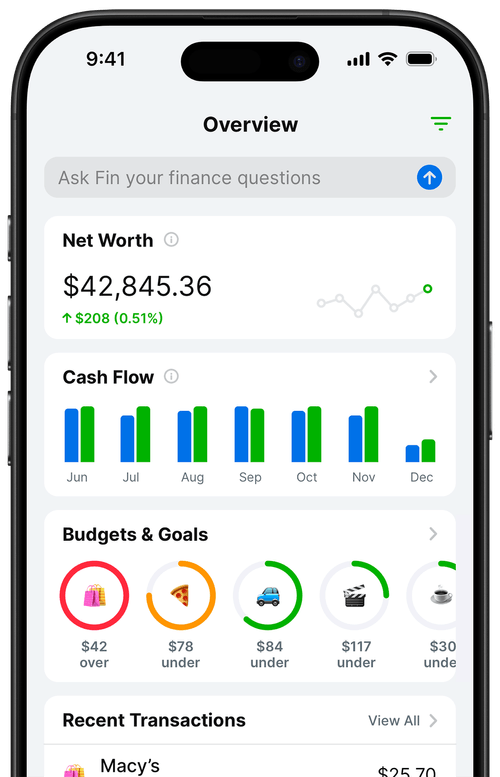
If you have been tracking spending loosely, this is the moment where actual data matters. Knowing that you spent $340 on restaurants last month is more actionable than guessing you spend "around $200." The difference changes what's realistic to cut.
What extra income sources actually help pay down debt?
Cutting expenses has a floor: you cannot spend less than zero. Income, in theory, has no ceiling. Bringing in extra money on top of a trimmed budget compounds your progress in a way that cutting alone cannot.
The most reliable extra income sources for someone focused on debt payoff are the ones with low startup cost and immediate payout. Selling items you already own is the fastest path: electronics, furniture, sporting equipment, and clothing on platforms like eBay, Craigslist, or Facebook Marketplace can generate several hundred dollars in a weekend. Every dollar goes straight to principal, which means it saves you the interest that would have accumulated on that amount.
Service-based side work, such as freelance writing, design, tutoring, yard work, or pet sitting, converts time into cash without requiring capital. It is not passive, but it is reliable and scalable based on how much time you put in. Even an extra $200 or $300 per month applied consistently to a high-interest balance can cut months off your payoff timeline.
One thing worth considering: if your employer offers overtime or project-based bonuses, earmark those amounts for debt before they hit your regular account. It is easier to redirect money you have not yet counted as available than to reallocate money that has been sitting in checking for a week.
Tax refunds and annual bonuses deserve the same treatment. Applying a $2,000 tax refund to a credit card balance rather than spreading it across discretionary spending can eliminate a balance entirely, which removes that minimum payment from your monthly obligations and frees cash every month going forward.
How do you negotiate with creditors to lower what you owe?
Most people do not realize that interest rates on credit cards are negotiable, and many creditors will work with you on payment arrangements if you have fallen behind. The downside of asking is nothing. The upside can be meaningful.
Negotiating a lower interest rate
Call the number on the back of your credit card. Ask to speak with a retention specialist or a supervisor. Reference your payment history if it has been consistent, mention that you are considering transferring the balance to a competing card with a lower rate, and ask directly: "Is there anything you can do to lower my interest rate?" This works more often than most people expect, particularly for accounts that have been open for a year or more with on-time payments. A reduction from 24 percent to 18 percent on a $4,000 balance saves around $240 per year in interest, which is real money applied to principal.
Debt management plans
If you are carrying debt across multiple cards and the payments feel unmanageable, a nonprofit credit counseling agency can help you set up a debt management plan (DMP). Under a DMP, the agency negotiates reduced interest rates with your creditors on your behalf, and you make a single monthly payment to the agency, which distributes it across your accounts. Nonprofit agencies certified by the National Foundation for Credit Counseling (NFCC) charge minimal fees and are worth a conversation if you are overwhelmed by the number of accounts you are juggling.
Debt settlement (use with caution)
Debt settlement, where you negotiate to pay less than the full balance owed, is an option of last resort. It damages your credit score significantly, the forgiven amount may be treated as taxable income, and for-profit settlement companies frequently charge high fees while leaving you worse off. If you are considering this route, speak with a nonprofit credit counselor first.
How long does it actually take to pay off debt?
There is no universal answer, and anyone who gives you one without knowing your numbers is guessing. That said, you can calculate a realistic timeline for your situation with basic arithmetic.
Take your total debt balance, subtract your monthly minimum payments, and estimate how much extra you can consistently apply each month. A free debt payoff calculator (there are several available from credit unions and nonprofit finance organizations) will show you a payoff date given any set of inputs. Run the calculation with your current extra payment, then run it again with an extra $100 added. The difference in payoff time is often surprising and motivating.
As a rough benchmark: if you owe $15,000 at an average rate of 20 percent and can apply $400 per month above minimums, you would pay it off in roughly four years and pay about $8,000 in interest over that period. Increase that extra payment to $600 and the timeline drops to about two and a half years, saving several thousand dollars in interest. The math rewards urgency.
One thing worth keeping in mind: debt payoff is not linear. The early months often feel slow because the balances are large and the interest keeps regenerating. Once one account closes, the freed-up payment accelerates everything else. The pace picks up in the back half. Most people who abandon the plan do so in the first six months, before the momentum becomes visible.
The most important thing is not which method you pick or how aggressively you cut. It is that you start, you measure your progress with real numbers, and you keep going when the pace feels slow.
Frequently Asked Questions
Should I save money while paying off debt?
Yes, but prioritize a small emergency fund first: aim for one to three months of essential expenses. Without any savings buffer, an unexpected car repair or medical bill will push you back into debt and undo your progress. Once that buffer exists, direct additional surplus toward high-interest debt aggressively.
What is the fastest way to pay off debt?
The avalanche method, targeting your highest-interest debt first while paying minimums on everything else, saves the most money and gets you debt-free fastest in mathematical terms. If motivation is your obstacle, the snowball method (smallest balance first) can help you build momentum. The fastest method is whichever one keeps you consistent.
Can I negotiate my interest rates with credit card companies?
Yes. Call the number on the back of the card, ask to speak with a retention specialist, and reference your payment history. A lower rate is not guaranteed, but many people get one simply by asking. The downside of trying is zero.
How much extra should I put toward debt each month?
Any consistent amount above your minimum payment accelerates payoff. Even an extra $50 per month on a $5,000 balance at 20 percent interest saves meaningful money over time. More is better, but consistency matters more than size. An extra $100 every month beats $500 applied once and then forgotten.
What are the warning signs that debt is becoming unmanageable?
Consistently missing minimum payments, using credit cards for groceries or utilities because cash runs out before the end of the month, and feeling unable to see a realistic path forward are the clearest signals. If you are at that point, a nonprofit credit counseling agency certified by the NFCC is a good first call. They offer free or low-cost initial consultations.