


Key takeaways
- Freelancing existing skills has the lowest startup cost and the fastest path to first income.
- Selling physical or digital goods scales over time but requires upfront effort before passive income kicks in.
- Service-based side hustles (virtual assistant, transcription, tutoring) pay hourly and are easier to start than content businesses.
- Any side hustle income is taxable. Tracking it from day one prevents a painful surprise in April.
- The side hustles that compound are the ones tied to a skill you were already building.
If you want to make money from home, the options are not actually the problem. There are hundreds of ways to earn extra income without a commute. The problem is choosing one that fits your situation, starting it without overthinking the setup, and then not losing track of what you earn once money starts moving.
I've run my business from home since 2014, and I've also picked up several side income streams over that time. What I've learned is that the ideas themselves are almost secondary. The gap between people who generate meaningful side income and people who give up after three months usually comes down to two things: choosing work that maps to a skill they already have, and treating the income like income (meaning they track it properly from the start).
This guide covers the categories of home-based work that hold up in practice, what each one actually pays, and how to keep the financial picture clear once you have multiple income streams running.
How do you choose the right way to make money from home?
The most common mistake people make is starting with the highest-earning option on a list rather than the one most likely to survive contact with their actual life. A YouTube channel can eventually pay well, but it requires months of unpaid output before you see a dollar. Online surveys pay immediately but cap out around $5 to $15 per hour and cannot scale.
A more useful framework is to sort options along two axes: time-to-first-dollar and long-term ceiling. Freelancing your existing skills tends to score well on both. It can produce income within days of signing up on Upwork or Fiverr, and your hourly rate can climb steadily as you build a track record. Content businesses (YouTube, newsletters, podcasts) have a high ceiling but a long runway. Passive income streams like selling stock photos or digital downloads sit somewhere in the middle: they require significant setup before they compound, but they do not require trading time for every dollar earned.
The question worth asking before you commit: do you have a skill, asset, or audience that maps to this option? If yes, start there. If no, you are building from zero in an area you are also unfamiliar with, and that raises the time-to-first-dollar considerably.
How to make money from home by freelancing your existing skills
Freelancing is the fastest path to side income for most people, because it requires no inventory, no upfront investment, and no platform-building. If you can write, design, code, translate, edit video, or manage social media accounts, there is a market for that work right now.
The main platforms worth knowing:
- Upwork for longer-term client relationships and higher-ticket professional services
- Fiverr for productized services with fixed prices and faster transaction cycles
- Toptal for software developers and designers who want to command premium rates and go through a screening process
- Contra for independent professionals who want commission-free project work
Pay ranges are wide because they are skill-dependent. Entry-level writing gigs on Fiverr pay $15 to $25 per article. Experienced UX designers or software developers on Upwork regularly earn $75 to $150 per hour. The platform does not set your ceiling; your track record and the specificity of your skill do.
One practical note: specialize early. A profile that says "I write content about B2B SaaS onboarding" gets more traction than one that says "I write anything." Narrowing your positioning feels counterintuitive when you are starting out, but it makes it dramatically easier for the right clients to find you.
How to make money from home selling physical or digital goods
Selling goods from home covers a wide range, from listing clothes on Poshmark to building a digital product business on Etsy or your own website. Each has a different economics profile.
Reselling physical items (clothes, furniture, electronics) is a good starting point because the inventory already exists in your home. Poshmark and The RealReal are the strong options for clothes. Facebook Marketplace works well for furniture and household items. The upside is immediate cash. The ceiling is limited by how much inventory you can source and process.
Selling digital products (printables, templates, presets, ebooks, courses) has a much higher ceiling because you make the thing once and sell it repeatedly. The tradeoff is that building enough traffic to generate consistent sales takes time, usually three to six months at minimum. Etsy's built-in search helps discoverable categories like planners and resume templates. If you want more control over margin, a simple Gumroad or Lemon Squeezy storefront works without a monthly fee.
Stock photography is a slower path but genuinely passive once your portfolio is built. Shutterstock and Adobe Stock pay per download, ranging from $0.25 to $2.00 per image for most contributors. Building a meaningful portfolio takes consistent effort over six to 12 months before income becomes reliable.
How to make money from home with service-based work
Service-based side hustles trade time for money, but they start paying faster than almost anything else on this list. If you need income in the next two to four weeks, this is where to look.
Virtual assistant work covers a broad range: scheduling, inbox management, data entry, customer support, research. Pay typically runs from $15 to $40 per hour. The higher end usually requires some domain expertise, such as supporting a specific type of business or managing a particular tool well. Belay and Time Etc are two agencies that place VAs with clients, which is a faster way to get started than cold outreach.
Online transcription requires only strong typing skills and attention to detail. Rev and GoTranscript pay per audio minute rather than per hour, so your effective hourly rate rises as your speed improves. Experienced transcribers earn $20 to $25 per hour. Legal and medical transcription pays at the higher end but requires specialized vocabulary.
Online tutoring is worth considering if you have domain expertise in a subject with student demand. Platforms like Wyzant let you set your own rate, and experienced tutors in high-demand subjects (SAT prep, calculus, coding) charge $50 to $100 per hour. The work is flexible and fully remote.
Proofreading and copy editing is another skill-based option with low barriers to entry. Upwork has a steady supply of proofreading jobs. If you want to specialize, legal and academic proofreading tends to pay better than general editing, and clients in those categories are often repeat buyers.
How to make money from home through content and audience building
Content-based income streams (YouTube, newsletters, blogging, podcasting) are the ones most people romanticize and underestimate the time horizon for. They are legitimate. They can produce substantial, largely passive income. And they take longer than most people expect to hit meaningful revenue.
The economics of each platform:
- YouTube: Ad revenue through the YouTube Partner Program requires 1,000 subscribers and 4,000 watch hours before monetization unlocks. Once it does, RPM (revenue per thousand views) ranges from $1 to $10 depending on topic and audience geography. Sponsorships layer on top and typically pay more per view than AdSense.
- Newsletter/blog: Income comes through sponsorships, affiliate commissions, or selling your own products. The common affiliate benchmark is 1 to 5 percent of traffic converting. Build around a specific topic, not a general interest, and distribution compounds faster.
- Skillshare / Udemy courses: Skillshare pays per minute watched (roughly $0.05 to $0.10). Udemy is transactional. Both platforms generate passive income once a course is live, but the initial production effort is substantial.
The pattern that works across all of these: pick one channel, stay consistent for at least 12 months, and focus on a narrow enough topic that you are genuinely useful to a specific audience. Generalist content in competitive topics grows slowly. Specific, expert content in underserved topics grows faster.
How do you track side hustle income without losing the thread?
This is the part most guides skip, and it is the one that causes the most real-world problems. When you have a day job, one employer sends you a W-2 and that is your income. When you have side income, it comes from Upwork, PayPal, Stripe, Etsy, and three other sources on irregular schedules, and you are responsible for setting aside tax on every dollar yourself.
A few things I do that make this manageable:
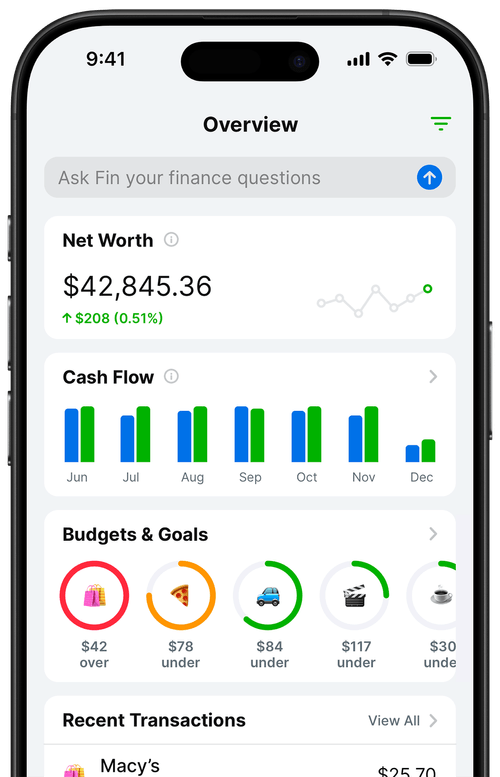
First, I log every payment when it arrives, not at the end of the month. Small deposits are easy to forget if you let them accumulate. A dedicated income category for each source makes the summary view accurate without requiring memory.
Second, I treat 25 to 30 percent of every side income payment as already spent, because it belongs to the IRS. Setting that aside into a separate savings bucket immediately takes the anxiety out of quarterly estimated taxes. You are not saving for a bill; you are just keeping your own money sorted correctly.
Third, I track expenses against each income stream. The cost of a Canva subscription for digital product creation is deductible. Equipment for a podcast is deductible. If you are not recording these, you are overpaying in April.
The financial discipline here is not complicated, but it does require consistency. The difference between a side hustle that adds meaningfully to your financial picture and one that evaporates in fees and forgotten taxes is usually just whether you treated it like a real income source from month one.
Frequently Asked Questions
How much can you realistically make from a home-based side hustle?
It varies considerably. Freelancers on platforms like Upwork can earn $20 to $80 per hour depending on skill level. Passive income streams like selling digital products or stock photos start slow and build over months. Most people with one part-time side hustle bring in $200 to $1,000 extra per month in the first year.
Do you have to pay taxes on side hustle income?
Yes, all side hustle income is taxable. If you earn more than $400 in net self-employment income, you are required to file a Schedule SE and pay self-employment tax. Platforms like Upwork and Fiverr will issue a 1099-NEC if you earn over $600 in a year. Track every payment from day one and set aside 25 to 30 percent for taxes.
What is the easiest way to make money from home with no startup costs?
Freelancing an existing skill is the lowest-barrier option. If you can write, design, code, edit video, or translate, you can create a profile on Upwork or Fiverr today with no upfront investment. Online transcription and virtual assistant work are similarly low-cost entry points with fast time-to-first-dollar.
How do you track income from multiple side hustles?
The most reliable method is a dedicated category in a personal finance app for each income stream, logged when each payment arrives. Separating side hustle income from your main salary lets you see true profitability, identify which streams are worth growing, and set aside the right amount for quarterly estimated taxes.
Can you make a full-time income working from home?
Yes, and many people do. Freelancers specializing in high-demand skills like software development, copywriting, or UX design routinely earn six figures working from home. The key is choosing work with strong market demand, building a portfolio, and raising rates as your track record grows.