


Key takeaways
- Tracking your actual spending for 30 days before making any changes is the most reliable foundation for better financial decisions.
- Debt payoff works best when you match the method (snowball or avalanche) to your own motivation style, not just the math.
- Automation removes willpower from the equation: savings that happen automatically on payday are savings that actually happen.
- Emotional triggers drive more financial decisions than most people realize. Identifying yours is a practical skill, not just a mindset exercise.
- Financial confidence compounds: each good decision makes the next one easier.
Making better financial decisions isn't about knowing more or earning more. It's about building systems that work in your actual life, not an idealized version of it. I've watched people with high incomes make consistently bad decisions and people with modest incomes build genuine financial confidence, and the difference almost always comes down to habits and awareness, not salary.
This guide covers the practical foundations: what to track, how to pay off debt without burning out, how to use automation as a force multiplier, and how to recognize the emotional patterns that quietly undermine even the best-laid plans.
How do better financial decisions start with awareness?
The fastest way to improve your financial decisions is to see what you're actually doing, not what you think you're doing. Most people carry a rough mental model of their spending, and most of those mental models are wrong by 20 to 40 percent in at least one category.
Tracking expenses for 30 days before changing anything is the move I recommend to everyone starting out. Not budgeting, not cutting, just observing. You're looking for leakages: the categories where your real spending is noticeably higher than your estimate. For most people, it's dining out, subscriptions, or convenience purchases that add up invisibly throughout the month.
Once you have real data, you're no longer guessing. The question shifts from "where is my money going?" to "is this where I want my money going?" That's a much more tractable question, and it's one you can actually answer with confidence.
The tracking habit also creates a feedback loop. When you know you'll review your spending at the end of the week, you make slightly more deliberate choices throughout it. The act of measuring changes the behavior, which is exactly what you want.
How do you tackle debt strategically?
Debt is the most common obstacle between people and financial momentum, and it's one where the right strategy depends on your psychology as much as the numbers.
The avalanche method targets your highest-interest debt first, regardless of balance size. Mathematically, this saves you the most money over time. If you can stay motivated without quick wins, this is the superior approach.
The snowball method targets the smallest balance first. You pay it off faster, get a concrete win, and use that momentum to attack the next one. Research on debt repayment behavior consistently shows that this method leads to higher completion rates because the psychological reward of eliminating a debt entirely is genuinely motivating for most people.
Neither method works if you don't pick one and execute it consistently. The worst outcome is switching between approaches every few months because nothing seems to be working fast enough.
Debt consolidation deserves a mention here as well. Simplifying multiple payments into a single loan at a lower rate can reduce both friction and total interest paid. The risk is extending your repayment timeline unnecessarily. Before consolidating, map out exactly when you'll be debt-free under the new terms and make sure it's actually an improvement.
For credit card debt specifically, one tactic most people overlook is negotiation. Call your card issuer and ask for a lower rate. Long-term customers with on-time payment histories have more leverage than they realize. If you're considering a balance transfer to a zero-percent introductory card, make sure you have a concrete plan to pay off the full balance before the promotional period ends. The deferred interest charges that kick in afterward can erase every dollar you saved.
How does intentional spending improve your finances?
Frugality gets a bad reputation because most people associate it with deprivation. The version that actually works is different: it's about spending more on what genuinely matters to you and less on what doesn't.
Start by identifying what categories bring you real satisfaction versus what you spend on by default or habit. Most people find that a significant chunk of their discretionary spending falls into the second category: things they buy without much thought and don't particularly enjoy or value afterward.
Cutting those default expenditures doesn't feel like sacrifice. It feels like clarity. The money you recover gets redirected toward savings, debt payoff, or the categories where spending actually does improve your quality of life.
The practical test for any spending decision: would I choose this again if I had to think about it for 10 seconds? Automatic purchases rarely pass that test. Intentional ones usually do.
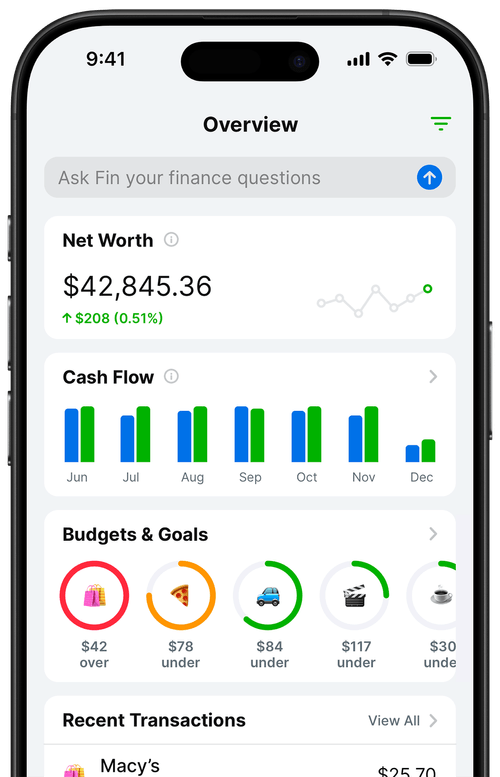
How can automation lock in your best financial decisions?
The biggest problem with relying on willpower for financial decisions is that willpower is a limited resource. You make dozens of decisions every day, and by the time evening comes around, the quality of those decisions tends to decline. Automation routes around the problem entirely.
Paying yourself first is the foundational principle here. Set up an automatic transfer to savings on the same day your paycheck lands. Saving becomes the default, not something you do with whatever happens to be left at the end of the month. That shift in framing changes everything, because leftover money has a way of disappearing.
Start with whatever amount feels manageable, even if it's small. The habit of automatic saving matters more than the initial amount. As your income grows or you reduce expenses elsewhere, increase the transfer incrementally. Raising it by one percent every six months is barely noticeable in day-to-day life but adds up significantly over time.
Automated bill payments eliminate late fees and the mental overhead of remembering due dates across multiple accounts. Scheduled investment contributions mean you're buying consistently, including during market downturns, without having to consciously decide to do so each time. Both reduce decision fatigue and remove opportunities for avoidance.
The goal is to build a system where the right financial behavior is the path of least resistance. When saving, paying on time, and investing happen automatically, you only need discipline for the edge cases.
How do emotions affect financial decision making?
Financial decisions aren't purely rational, and pretending they are leads to a lot of unnecessary self-blame when you make choices you later regret.
Money is tied to security, identity, fear, and status in ways that most financial advice doesn't acknowledge. If you grew up with financial instability, you might hoard cash in a checking account earning nothing because large balances feel safe, even when a high-yield savings account or investment would serve you better. If you feel insecure socially, you might spend on visible signals of success. If you're bored or stressed, spending can feel like a quick fix.
None of these are moral failings. They're patterns, and patterns can be identified and changed.
The practical approach is to track not just what you spend but what you were doing and feeling when you spent it. After a month of this, patterns usually become obvious. You might find that you spend significantly more on food delivery after stressful work weeks, or that weekend shopping trips are really about boredom rather than need. Once you can name the trigger, you can plan a different response for it.
This kind of self-awareness isn't a substitute for a budget or a debt payoff plan, but it's the layer underneath those tools that determines whether they actually stick.
How do consistent decisions build financial independence?
Financial independence, in practical terms, means having enough saved and invested that your money generates enough income to cover your expenses. Getting there isn't a single dramatic decision. It's the cumulative result of hundreds of smaller ones made consistently over years.
The most useful framing I've found is to think of each good financial decision as making the next one easier. When you pay off a debt, you free up cash flow for saving. When your savings grow, you worry less, which makes it easier to think clearly about the next decision. The positive feedback loop is real, and it accelerates once you've built momentum.
Knowing your target number is motivating in a concrete way. Calculate how much you'd need invested to cover your annual expenses at a four percent withdrawal rate. Track your progress toward that number. Watching it move, even slowly, keeps the long-term goal visible during periods when it's tempting to backslide.
Your investment risk tolerance should evolve as you get closer to needing the money. Younger investors can weather more volatility; people approaching the point where they'll draw on their investments should gradually shift toward more stability. Revisiting this every few years, especially after major life changes, is part of making consistently good decisions rather than setting it and forgetting it.
When does getting professional help make sense?
There's no shame in working with a financial advisor, and the right time to do it is when your situation becomes complex enough that a professional can add more value than their cost.
That threshold is usually reached during major life transitions: retirement planning, receiving an inheritance, a significant income change, a divorce, or a business sale. These situations involve tax implications, legal structures, and long-term projections that most people aren't equipped to optimize on their own.
For everyday budgeting, debt management, and savings decisions, you generally don't need to pay for advice. A solid tracking system, a clear debt payoff plan, and automated savings will handle most of the heavy lifting. Where advisors earn their fee is in the edge cases and the complex planning scenarios where a mistake is expensive and hard to reverse.
If you do work with an advisor, look for a fee-only fiduciary. That means they're legally required to act in your interest, and they're paid a flat fee rather than commissions on the products they recommend. The distinction matters.
Frequently Asked Questions
What is the first step to making better financial decisions?
The first step is awareness: tracking where your money actually goes. Most people are surprised by their real spending patterns once they see the data. Tracking for 30 days before changing anything is the most reliable starting point because it gives you real numbers to work from instead of estimates.
Should I use the debt snowball or debt avalanche method?
It depends on your motivation style. The avalanche method (highest interest first) saves more money mathematically. The snowball method (smallest balance first) builds momentum through quick wins and has higher completion rates for most people. Either works if you stick to it consistently.
How does automating finances help with decision making?
Automation removes willpower from the equation. When savings transfers and bill payments happen automatically on payday, you don't rely on remembering or feeling motivated. The decision is made once and then runs itself, which is a much more reliable system than depending on discipline every month.
How do emotions affect financial decisions?
Emotional spending is one of the most common reasons people overspend. Boredom, stress, and anxiety all drive purchases that feel right in the moment but undermine long-term goals. Tracking not just what you spend but when and why reveals patterns you can actually do something about.
When should I talk to a financial advisor?
A financial advisor adds the most value during major life transitions: retirement planning, inheritance, significant income changes, or complex tax situations. For everyday budgeting and spending decisions, a good tracking system and honest analysis will take you most of the way. When you do hire an advisor, look for a fee-only fiduciary.