


Key takeaways
- Your monthly mortgage payment should stay at or below 28 percent of your gross monthly income, with total housing costs under 36 percent.
- Median U.S. home prices have nearly doubled since 2013, which means your budget benchmark needs to account for a very different market than what your parents experienced.
- If the house you want is out of reach, there are at least eight concrete strategies beyond "save more money" that can close the gap.
- Down payment, closing costs, property taxes, insurance, and maintenance all need to be in your budget before you start touring homes.
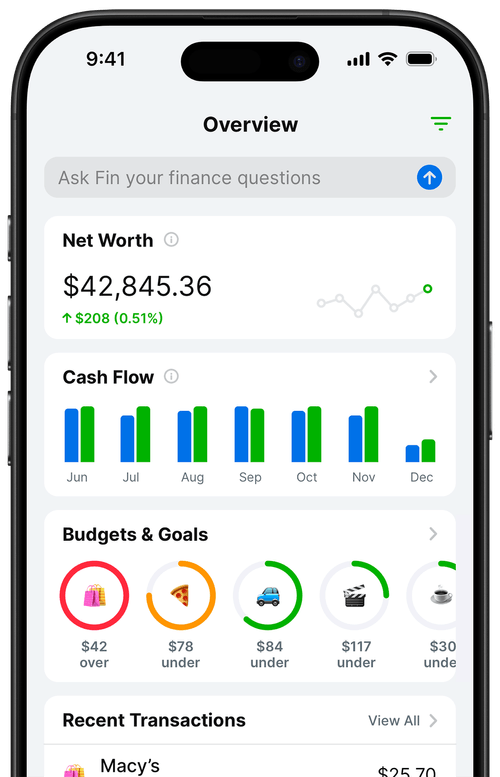
- Tracking your current spending is the clearest first step toward knowing what you can actually afford to take on as a mortgage payment.
Buying a home is probably the largest financial decision most people make, and the part that trips people up most often is not the mortgage paperwork or the inspection reports. It is starting with a budget number that was never grounded in reality. Finding a house within your budget requires knowing what that budget actually is before you fall in love with a listing, not after.
I have watched a lot of people approach homebuying the wrong way: they find a house they want, then work backwards to justify the price. That approach almost always leads to being house-poor, overextended, or both. The smarter path is to set your ceiling using your real income and your real monthly obligations, then search within that ceiling with confidence.
How much house can I actually afford?
The standard rule is that your monthly mortgage payment, including principal and interest, should not exceed 28 percent of your gross monthly income. The broader "36 percent rule" says your total debt payments, which includes your mortgage, car loan, student loans, and credit cards, should stay under 36 percent of gross income. These are guardrails, not guarantees, but they exist for good reason: lenders use them because the historical data backs them up.
On top of the mortgage payment itself, you need to account for property taxes, homeowners insurance, and potential HOA fees. Depending on where you buy, those three items can add hundreds of dollars per month to your housing cost. If you are putting less than 20 percent down, add private mortgage insurance (PMI) on top of that.
A practical exercise: take your gross monthly income and multiply it by 0.28. That is the ceiling for your principal-and-interest payment. Then use a mortgage calculator with current rates, your expected down payment, and a loan term to work backwards to the home price that produces that payment. That number is your realistic budget, not the maximum the bank will approve you for. Lenders will often approve you for more than you can comfortably afford.
Also budget for maintenance from day one. A common rule of thumb is one percent of the home's value per year for upkeep. On a $400,000 home, that is $4,000 a year, or roughly $333 per month, that never appears in your mortgage payment but absolutely affects your cash flow.
What have home prices done over the past decade?
Context matters when you are setting expectations. U.S. median home prices have risen substantially since 2013, which changes the math on what "affordable" looks like depending on when you last seriously looked at the market.
| Year | Median U.S. Home Price |
|---|---|
| 2013 | $226,255 |
| 2014 | $285,775 |
| 2015 | $294,115 |
| 2016 | $305,125 |
| 2017 | $322,425 |
| 2018 | $325,275 |
| 2019 | $320,250 |
| 2020 | $336,950 |
| 2021 | $396,800 |
| 2022 | $457,475 |
Source: Federal Reserve Bank of St. Louis (FRED): MSPUS
Median prices roughly doubled between 2013 and 2022. The 2020-2022 run-up was especially steep, driven by historically low mortgage rates attracting more buyers into a low-inventory market at the same time. The point of this table is not to be discouraging. It is to calibrate your expectations: if you are comparing the current market to what your parents paid for their house, the numbers will not map cleanly.
What should I do when the house I want is out of budget?
This is the question most homebuying guides dance around. The honest answer is that there are real options, and "save more and wait" is only one of them. Here are the strategies worth considering seriously.
Expand your search area
Neighborhoods vary dramatically in price even within the same metro area. A 15-minute commute increase can sometimes translate into a 20 to 30 percent reduction in home price. If you are open to a slightly different location, run the numbers before you rule it out.
Consider a fixer-upper
Homes that need renovation sell below comparable move-in-ready properties. The key is to get a thorough inspection before making an offer, then get contractor estimates for the work, and add a realistic contingency buffer on top of those estimates. Renovation costs almost always run higher than the initial quote. If you have tolerance for a project and can stage the work over time, this approach can get you into a neighborhood that would otherwise be out of reach.
Look into government-backed loan programs
FHA loans allow down payments as low as 3.5 percent for buyers with credit scores of 580 or higher. Many states and counties also run first-time homebuyer assistance programs that offer down payment grants or low-interest second mortgages. These programs exist specifically for buyers with limited savings, and they are worth investigating before you assume a 20 percent down payment is required.
Increase your down payment
A larger down payment reduces both your monthly payment and your total interest paid over the life of the loan. It also eliminates PMI once you hit 20 percent equity. If you are close to a meaningful down payment threshold, it may be worth delaying your search by six to twelve months to reach it.
Consider a co-buyer
Purchasing with a partner, family member, or trusted friend combines income and improves your qualification profile. This arrangement requires a clearly written agreement covering what happens if one party wants to sell, needs to move, or cannot make their share of the payment. Get a real estate attorney involved before you close.
Negotiate the price
In a buyer's market, or with listings that have been sitting for a while, sellers are often more flexible than the listing price suggests. Start with comparable sales data, not just your gut feeling, and make a case for why a lower offer is reasonable. Respectful, well-reasoned negotiation is normal and expected.
Look at foreclosed properties
Foreclosures and bank-owned properties (REO) often sell below market value, but they typically require repairs, may have title complications, and are sold as-is. Factor in both the renovation budget and additional legal review costs when evaluating these properties.
Explore rent-to-own agreements
Some sellers offer rent-to-own arrangements where a portion of your monthly rent applies toward a future purchase price. This lets you lock in the property while continuing to build savings. Terms vary widely, so read any rent-to-own contract carefully and have an attorney review it before signing.
Consider a different property type
Condos, townhouses, and duplexes typically price below single-family homes in the same neighborhood. If your requirements are about location and square footage more than property type, these can be a practical compromise. Be sure to factor in HOA fees when comparing the total monthly cost.
Work on your credit score
Your credit score directly affects the mortgage interest rate you qualify for. Even a half-point improvement in your rate can save tens of thousands of dollars over a 30-year loan. Pay down revolving balances, make every payment on time for the six months leading up to your mortgage application, and dispute any errors on your credit report. This is a lever worth pulling if you have time before you need to buy.
What financial factors matter most when buying a home?
Buying a house involves a set of one-time costs and ongoing obligations that go well beyond the mortgage payment. Here is a complete picture of what to plan for.
Down payment
The down payment is typically three to 20 percent of the purchase price. Higher down payments reduce your loan balance, eliminate PMI, and improve your loan terms. Conventional loans require at least three percent down for qualified buyers. FHA loans allow 3.5 percent with a qualifying credit score.
Closing costs
Closing costs typically range from two to five percent of the purchase price. They cover appraisal fees, title insurance, attorney fees, lender origination fees, prepaid property taxes, and homeowners insurance. On a $350,000 home, that is $7,000 to $17,500 in cash due at closing on top of your down payment. Budget for this explicitly so it does not catch you off guard.
Property taxes
Property tax rates vary significantly by location. They are typically quoted as a millage rate or a percentage of assessed value. Research the effective tax rate in any area you are considering, because two homes with identical prices can have meaningfully different annual tax bills depending on the county.
Homeowners insurance
Lenders require homeowners insurance, and the cost varies based on the home's value, location, construction type, and your claims history. Get quotes before you make an offer so the insurance cost is built into your affordability calculation rather than added as a surprise at closing.
PMI
If your down payment is less than 20 percent on a conventional loan, you will pay private mortgage insurance until you reach 20 percent equity. PMI typically costs between 0.5 and one percent of the loan amount annually. On a $300,000 loan, that is $1,500 to $3,000 per year, or $125 to $250 per month.
Mortgage pre-approval
Get pre-approved before you start seriously touring homes. A pre-approval letter tells you how much a lender will actually lend you, makes your offers more competitive, and speeds up the process once you find the right property. Pre-approval requires a hard credit pull, so time it appropriately if you are also working on your credit score.
Fixed vs. adjustable rate mortgages
A fixed-rate mortgage locks your interest rate for the life of the loan, which gives you predictable payments. An adjustable-rate mortgage (ARM) starts with a lower rate that resets periodically based on market indices. ARMs can make sense if you plan to sell or refinance before the adjustment period kicks in. Otherwise, the rate risk is not usually worth the initial savings.
HOA fees
If the property is in a community with a homeowners association, monthly or annual HOA fees are a real part of your housing cost. These can range from $50 to several hundred dollars per month depending on the community. Review the HOA's financial health, reserve funds, and pending special assessments before buying.
Maintenance and reserves
Plan to set aside at least one percent of the home's value annually for maintenance and repairs. This covers expected upkeep like HVAC service, appliance replacement, and roof repairs over time. If you are buying an older home, budget closer to two percent. Having a dedicated home maintenance fund, separate from your emergency fund, prevents a broken water heater from derailing your monthly budget.
Emergency fund
Do not drain your emergency fund to make a larger down payment. Most financial planners recommend keeping three to six months of living expenses in cash after closing. Homeownership introduces more financial variability than renting, not less, and you want a buffer for unexpected repairs, job changes, or income disruptions.
Resale value and equity
Even if you plan to stay for many years, think about the property's likely resale value. Homes in neighborhoods with good school districts, walkability, or proximity to employment centers tend to hold their value better than those without those attributes. Building equity through mortgage payments is one of the primary financial advantages of homeownership over renting, so choose a property that is likely to appreciate rather than one that might be difficult to sell later.
Tax implications
Mortgage interest and property taxes may be deductible on your federal return if you itemize deductions, though the 2017 changes to the standard deduction made itemizing less common for many homeowners. Talk to a tax advisor before you close to understand how homeownership will affect your specific tax situation.
Frequently Asked Questions
What percentage of income should go to a mortgage payment?
The standard guideline is that your monthly mortgage payment (principal and interest) should not exceed 28 percent of your gross monthly income. Your total debt obligations, including the mortgage, should stay under 36 percent of gross income. These are guidelines, not hard limits, but staying within them significantly reduces the risk of financial strain.
How much do I need saved before buying a house?
You need a down payment (typically three to 20 percent of the purchase price), closing costs (two to five percent of the purchase price), and an emergency fund of three to six months of expenses that remains intact after closing. For a $350,000 home with a five percent down payment, that is roughly $17,500 down, plus up to $17,500 in closing costs, plus your emergency reserve.
What credit score do I need to buy a house?
FHA loans require a minimum score of 580 for 3.5 percent down (or 500 with 10 percent down). Conventional loans typically require a score of at least 620, though you will get the best rates with a score above 740. Higher scores translate directly into lower interest rates, which meaningfully reduces the total cost of the loan over its term.
Is it better to put 20 percent down or keep savings?
Putting 20 percent down eliminates PMI and reduces your monthly payment, but it is not always the right call. Draining savings to reach 20 percent leaves you without a buffer for repairs or income disruptions. Many buyers are better off putting down less and maintaining a healthy emergency fund, particularly if PMI is relatively low compared to the risk of entering homeownership cash-poor.
What hidden costs should I budget for when buying a house?
Beyond the mortgage payment, budget for property taxes, homeowners insurance, PMI (if applicable), HOA fees, closing costs, moving costs, and ongoing maintenance at roughly one to two percent of the home's value per year. New homeowners often underestimate how quickly small maintenance expenses add up in the first year.
How do I find houses within my budget in an expensive market?
Start by widening your search area to include adjacent neighborhoods or suburbs. Consider different property types like condos or townhouses, which often price below single-family homes in the same area. Look at fixer-uppers with a realistic renovation estimate in hand. Explore government-backed loan programs that reduce the required down payment. And get pre-approved early so you can move quickly when a good listing appears at the right price.