


Key takeaways
- Eco-friendly spending habits often reduce spending over time. Reusables, bulk buying, and buying less all lower your costs.
- The most impactful sustainable purchases are the ones that replace recurring single-use spending: bottles, bags, coffee cups, batteries.
- Third-party certifications (Fairtrade, FSC, ENERGY STAR) are the fastest way to cut through greenwashing claims.
- Transportation and energy are where environmental choices and financial choices overlap the most clearly.
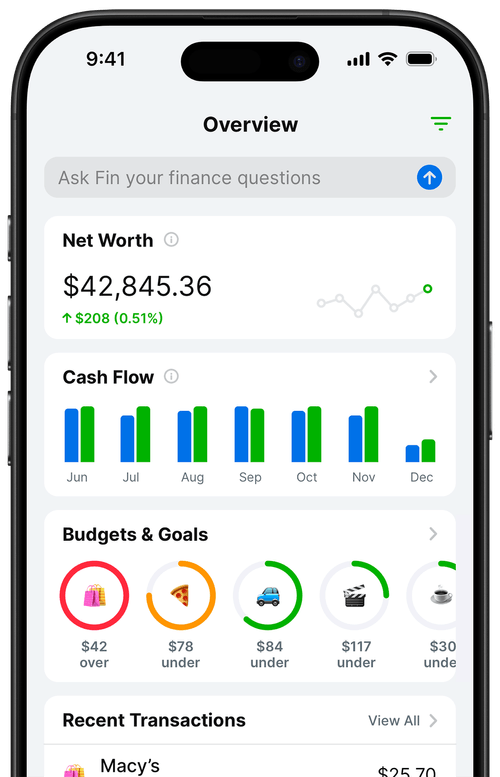
- Tracking where your money goes is the first step toward understanding which spending habits are actually worth changing.
Most writing about eco-friendly spending habits focuses on the planet and glosses over the financial angle. That's a mistake, because the honest case for sustainable shopping is partly a money case. Learning how to reduce spending by buying sustainable products isn't just about values. It's about understanding which purchases actually cost you less over time, and which ones are just expensive marketing wrapped in recycled cardboard.
The habits that hold up are the ones that work financially even if you don't care about the environment at all. If they also happen to generate less waste and support better labor practices, that's compounding upside. But I'd rather start with what's actually true about the numbers than with an appeal to guilt.
How do eco-friendly spending habits actually save you money?
The core mechanism is simple: sustainability often means buying fewer things, buying things that last longer, or replacing recurring purchases with a one-time purchase. All three of those outcomes are good for your budget.
Consider a reusable water bottle. A decent one costs $20 to $35. If you were buying a 20-ounce plastic bottle every weekday at $2 apiece, you'd spend around $500 a year. The reusable bottle pays for itself inside a month. The same logic applies to cloth grocery bags, rechargeable batteries, cloth napkins, and a decent travel mug.
The pattern breaks when "eco-friendly" becomes a premium label applied to things you'd never buy much of anyway. A $15 bamboo dish brush might be marginally better than a $3 plastic one, but you're not buying dish brushes frequently enough for the swap to matter financially. Put your attention on high-frequency, high-volume purchases first.
Where sustainable habits genuinely save money at scale:
- Buying in bulk with minimal packaging: unit cost drops and you make fewer trips
- Buying secondhand: clothing, furniture, electronics, and kitchen gear all hold functional value well past their "new" price
- Buying less overall: the most sustainable thing you can do with most categories of goods is simply buy fewer of them
- Choosing durable over disposable: a quality cast-iron pan outlasts a dozen cheap non-stick pans, at lower total cost
The habit of thinking in total cost of ownership rather than purchase price is where most of the financial benefit lives. It's also, not coincidentally, how sustainable purchasing is supposed to work.
What does sustainable shopping look like in practice?
Sustainable shopping is less about finding the right product and more about building a few reliable filters into your decision process.
The first filter is need. Before buying anything, the question is whether you actually need it or whether you're just reacting to availability, a sale, or a habit of browsing. A pause of 24 to 48 hours before non-essential purchases is one of the most effective ways to reduce both spending and waste. Most impulse purchases don't survive a short waiting period.
The second filter is longevity. When you do buy, favor items designed to last. This usually means buying from companies that offer repair services or replacement parts, or simply buying items with a track record of durability. Buying a quality item once at a higher price beats buying a cheap version three times at a lower price per unit.
The third filter is sourcing. For food, local and seasonal is usually better on both environmental and cost grounds. Farmers market produce isn't always cheaper than the grocery store, but it often is for staple vegetables in season, and you're more likely to buy only what you'll use rather than letting half a bag of spinach turn to compost in the back of your fridge.
For non-food categories, secondhand is the default worth reaching for first. Thrift stores, resale apps, and local buy-nothing groups have made secondhand sourcing faster and easier than it's ever been. A piece of furniture that cost $800 new might be available locally for $80 and in perfectly good condition.
How do you evaluate whether a company's eco claims are real?
Greenwashing is the practice of making a product or company sound environmentally responsible without the substance to back it up. Terms like "natural," "green," "clean," and "eco-friendly" have no legal definition in most markets. Any company can print them on packaging without meeting any standard at all.
The most reliable shortcut is third-party certification. These organizations have defined, audited standards that a product or company must meet before using their mark:
- Fairtrade: covers labor standards and fair compensation, mainly for food and agricultural products
- Rainforest Alliance: environmental and social standards for farms and forests
- Forest Stewardship Council (FSC): responsible forest management for wood and paper products
- USDA Organic: specific growing and processing standards for food
- ENERGY STAR: energy efficiency standards for appliances and electronics, set by the EPA
- B Corp: broader social and environmental business standards, third-party verified
Beyond certifications, a company that takes environmental claims seriously will usually publish specific, measurable commitments rather than vague language about "sustainability as a core value." Look for published environmental impact reports, carbon reduction targets with timelines, and supplier transparency. Companies that can't or won't answer basic sourcing questions are usually not worth the premium they charge for the eco label.
One practical test: if a company's entire sustainability section on their website consists of stock photos of forests and vague commitments to "doing better," that tells you something. Compare that to a company that publishes annual impact data with product-level detail. The latter is doing the work; the former is doing marketing.
What role does energy use play in your household budget?
Energy is one of the clearest places where environmental choices and financial choices point in exactly the same direction. Reducing the energy your home uses is good for the environment, and it immediately lowers a monthly bill you'll pay for as long as you live there.
The highest-impact household energy changes, ranked roughly by effort and cost:
- Behavioral changes (free): turning off lights and unplugging devices in standby mode. Standby power draw accounts for roughly five to ten percent of home electricity use for many households, according to the U.S. Department of Energy.
- Programmable or smart thermostat ($25 to $250): setting back temperature when you're asleep or away can reduce heating and cooling costs by around ten percent per year, according to EPA estimates.
- LED lighting (low cost, high return): LED bulbs use about 75 percent less energy than incandescent equivalents and last 15 to 25 times longer. The payback period on switching is typically under a year.
- Appliance upgrades (high cost, long-term payback): ENERGY STAR-certified refrigerators, washers, and dishwashers use meaningfully less energy. These are worth pursuing when an appliance needs replacement anyway, not as a standalone purchase.
One thing I'd flag: be cautious about the framing that buying a new energy-efficient appliance is automatically the sustainable choice. If your current appliance works, the environmental cost of manufacturing a new one often outweighs the efficiency gains for several years. The most sustainable appliance is usually the one you already own, kept running as long as reasonably possible.
How do eco-friendly transportation choices affect your finances?
Transportation is the second-largest expense category for most American households, trailing only housing. It's also where environmental impact and financial impact overlap the most directly.
The IRS standard mileage rate for 2024 is 67 cents per mile, which covers fuel, maintenance, insurance, and depreciation. That means every mile you don't drive saves you money at that rate. For short trips, the math on walking or cycling is straightforward: a two-mile round trip saved three times per week works out to roughly $210 per year, with no gym membership required.
Public transit offers a different calculation. A monthly transit pass in most mid-sized U.S. cities costs $50 to $100 per month. If it replaces car ownership, the savings are substantial. If it replaces some car trips while you still own a vehicle, the savings are more modest but still real: you extend vehicle life, reduce maintenance, and lower fuel costs.
Carpooling is worth considering specifically for commutes. Splitting fuel costs with one other person cuts your commute transportation costs roughly in half. Platforms like Waze Carpool and employer-organized programs make this more practical than it used to be.
For longer travel, the flight-versus-train calculation is worth running when the route allows it. Trains are generally lower carbon than flying for trips under 500 miles, and in some corridor markets (Northeast U.S., Western Europe) they're also cheaper and faster once you account for airport time.
None of this requires an electric vehicle, which is its own complicated purchase decision with a payback period that varies considerably based on your driving patterns, local electricity rates, and the vehicle you'd be replacing. EVs make financial sense for some people and not others. The habits that reliably save money are the ones that involve driving less, not the ones that involve buying a different kind of car.
Frequently Asked Questions
Do eco-friendly products always cost more?
Not always. Reusable items like water bottles, cloth bags, and rechargeable batteries cost more upfront but less over time. The savings depend on how often you would have bought the single-use alternative. High-frequency replacements are where the financial case is clearest.
What certifications should I look for on sustainable products?
Fairtrade, Rainforest Alliance, Forest Stewardship Council (FSC), USDA Organic, and ENERGY STAR are among the most reliable. Each covers a different category: labor practices, food, wood products, and energy efficiency respectively. B Corp covers broader business-level environmental and social standards.
What is greenwashing and how do I avoid it?
Greenwashing is when a company uses vague environmental claims like "natural," "green," or "eco-friendly" without certification or specific evidence to back them up. Avoid it by looking for third-party certifications and checking whether the company publishes a measurable environmental impact report with actual data.
How does buying local reduce my spending?
Local purchases often cut out costs from long supply chains. Farmers markets and local producers sometimes offer better per-unit pricing on staples in season, and you tend to buy closer to what you'll actually use. Smaller store formats also reduce the impulse purchasing that larger retail environments are designed to encourage.
Is walking or cycling actually cheaper than driving for short trips?
Yes. The IRS mileage rate for 2024 is 67 cents per mile. A two-mile round trip adds up to over $1.30 in vehicle costs per errand. Replacing even a few short drives per week with walking or cycling adds up to meaningful annual savings, plus you avoid parking costs in urban areas.