


Key takeaways
- A financial advisor is not required for retirement planning, but the complexity of your situation is the key deciding factor.
- Advisors add the most value during the decade before retirement, when Social Security timing, tax strategy, and withdrawal order decisions carry the biggest long-term consequences.
- Always verify that an advisor is a fiduciary before hiring one. Non-fiduciaries are not legally required to put your interests first.
- Fee-only advisors typically charge 0.5% to 1.5% of assets annually, or $200 to $400 per hour for project-based work.
- Before hiring an advisor, getting your day-to-day spending under control gives you far clearer numbers to plan from.
The question of whether you need a financial advisor for retirement planning is one I hear often, and the honest answer is: it depends. Not every person's financial situation is the same, and the value a professional advisor brings scales with how complicated your retirement picture actually is. Some people get to retirement in good shape by managing their own 401(k) and reading a few solid books. Others hand off decisions they have no business making alone and avoid costly mistakes. Neither path is inherently right.
What I want to do here is give you a clear framework for thinking it through, along with enough specifics about what advisors do, what they cost, and how to find a good one, so that your decision is actually informed.
Do I need a financial advisor for retirement planning, or can I do it myself?
The short answer is that most people with straightforward finances can manage their own retirement planning, especially in the accumulation phase when the core task is simple: save as much as possible in tax-advantaged accounts, keep your investment fees low, and stay the course. Index funds inside a 401(k) or IRA handle a lot of the heavy lifting if you let them.
The calculus shifts significantly as you approach retirement. The decade before you stop working is when decisions get genuinely complicated. When should you claim Social Security? In what order do you draw down your accounts? How do you handle required minimum distributions from traditional IRAs without triggering a surprise tax bill? How do you bridge healthcare coverage between retirement and Medicare eligibility at 65? These are not just financial questions; they are interconnected optimization problems where the wrong answer in one area costs you in another.
If you are financially literate, have a relatively simple situation, one or two retirement accounts, a clear sense of your expected expenses, and enjoy doing this kind of research, the DIY path is completely viable. Online tools for Social Security optimization and tax planning have gotten genuinely useful. If you are less confident, or if your situation involves multiple income streams, stock options, a pension, significant assets, or estate planning concerns, the cost of a good advisor is almost certainly worth it.
What does a financial advisor actually do for retirement planning?
It helps to be specific about what you are actually paying for. A retirement-focused financial advisor typically covers several distinct areas, not all of which are equally valuable for every client.
Retirement income planning
This is the core work. An advisor maps your expected expenses against your projected income sources, Social Security, pension payments, investment withdrawals, and any part-time work, and models whether your money lasts as long as you need it to. They will stress-test the plan against different scenarios: a down market in your first few years of retirement, higher-than-expected healthcare costs, or a longer lifespan than you planned for. Running these numbers yourself is possible but time-consuming, and small errors compound over a 30-year retirement.
Tax optimization
A good advisor thinks carefully about tax efficiency across your accounts. The order in which you withdraw from a Roth IRA versus a traditional IRA versus taxable brokerage accounts can meaningfully change your lifetime tax bill. Roth conversions in low-income years before Social Security kicks in are a common opportunity that people miss. Tax-loss harvesting in taxable accounts, timing of major expenses, and the interaction between Medicare premiums and income (IRMAA surcharges) are all areas where professional guidance tends to pay for itself.
Social Security timing strategy
Claiming Social Security at 62 versus 70 is not just an eight-year difference in benefits. Your health, your spouse's income and benefit, your other assets, and your expected longevity all factor in. Claiming too early because you need the money, or too late because you assumed waiting was always better, are both common mistakes. An advisor who specializes in retirement income will run the breakeven analysis for your specific situation rather than giving you a generic rule of thumb.
Ongoing portfolio management
Advisors who manage assets will rebalance your portfolio, handle required minimum distributions, and adjust your allocation as you age. For many people, the behavioral value here is significant. Having someone tell you not to panic-sell during a market correction is worth something, even if the advice is obvious.
Who benefits most from hiring a retirement planning advisor?
Based on what I have seen and researched, the people who get the clearest return from a financial advisor for retirement planning tend to fall into specific categories.
People within ten years of retirement. The pre-retirement decade is when the decisions carry the highest stakes. A single good decision about when to claim Social Security, or how to sequence account withdrawals, can be worth more than a decade of advisor fees.
Anyone with a pension or deferred compensation. Pension payout elections are usually irrevocable. Choosing between a lump sum and an annuity, or between different survivor benefit options, is the kind of decision you want professional help with because you cannot undo it.
People who have sold a business or received a large inheritance. A sudden influx of capital changes the tax picture and introduces options, like charitable giving strategies or trust structures, that are worth getting right from the start.
Couples with significantly different ages or income histories. The Social Security spousal and survivor benefit rules are genuinely complex, and the optimal claiming strategy for two people is harder to calculate than for one.
Anyone who just does not want to think about it. This is more valid than it sounds. If financial planning produces anxiety and you consistently avoid making decisions because the topic feels overwhelming, paying someone to handle it is a reasonable use of money.
How much does a financial advisor cost for retirement planning?
This is where a lot of people get tripped up, because advisor compensation structures vary and the differences matter.
Fee-only advisors charge you directly, either as a percentage of assets under management, typically 0.5% to 1.5% annually, or by the hour at rates of $200 to $400, or via a flat annual retainer in the range of $2,000 to $7,500. These advisors have no financial incentive to sell you any particular product. A one-time retirement plan consultation with a fee-only advisor often runs $500 to $2,000, which is a reasonable price to pay for a thorough review even if you plan to manage things yourself afterward.
Fee-based advisors charge fees but also earn commissions on products they sell. This is not necessarily disqualifying, but it introduces a conflict of interest you should understand before working with someone.
Commission-only advisors earn their income from selling products. They may genuinely have your interests at heart, but the incentive structure does not guarantee it. I would be cautious here, especially for retirement planning where the stakes are high.
The percentage-of-assets model is worth thinking through carefully. One percent of a $500,000 portfolio is $5,000 per year. Over 20 years of retirement, that adds up to a significant sum, even before you factor in what that money would have compounded to if it had stayed invested. Whether the ongoing guidance is worth that cost depends entirely on how actively the advisor engages with your plan versus just rebalancing quarterly and sending a report.
How do I choose a financial advisor for retirement planning?
If you decide to hire someone, the selection process matters as much as the decision to hire at all. A bad advisor costs more than no advisor.
Confirm fiduciary status first
Ask directly: "Are you a fiduciary at all times when advising me?" Some advisors are fiduciaries in some contexts but not others, such as when selling certain insurance products. You want someone who is a fiduciary across the board, not just when it is convenient. You can verify the status of most advisors through FINRA BrokerCheck or the SEC's investment adviser search.
Look for the right credentials
For retirement planning specifically, the CFP (Certified Financial Planner) designation is the most widely recognized. It requires passing a rigorous exam, completing thousands of hours of experience, and adhering to continuing education requirements. The RICP (Retirement Income Certified Professional) designation is more focused on retirement income planning and is worth looking for if the pre-retirement or decumulation phase is your primary concern.
Understand how they are compensated before you discuss your finances
Fee disclosure is required by law, but the format can be confusing. Ask the advisor to explain in plain language how they make money from your relationship. If the answer involves commissions on products they recommend, understand which products and why. There is nothing inherently wrong with a commission-based relationship, but you should go in with your eyes open.
Interview at least two or three advisors
Most advisors offer a free initial consultation. Use it. Ask about their typical client, how they communicate and how often, what their process looks like for someone in your situation, and how they handled client portfolios during a significant market downturn. The answers matter less than the quality of the thinking they reveal.
Check their disciplinary history
FINRA BrokerCheck and the SEC's IAPD database both let you search an advisor's registration history, including any complaints, disciplinary actions, or regulatory sanctions. Spend five minutes doing this before you hand anyone a check.
What should I handle on my own before seeing a financial advisor?
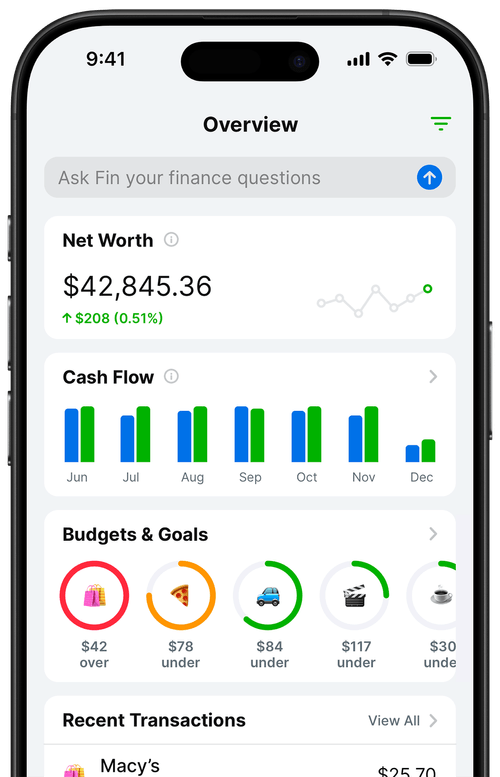
One of the most common ways people undercut the value of working with a financial advisor is arriving without a clear picture of their own finances. An advisor can only plan from the information you give them. If your spending is fuzzy, your estimates of retirement income needs will be fuzzy, and the plan built on top of them will be less useful than it should be.
Before your first appointment with any advisor, I would suggest getting a few things in order.
Know your current monthly spending by category. Not what you think you spend, but what your statements actually show. Housing, transportation, food, healthcare, subscriptions, entertainment: know the real numbers. This is the foundation of any retirement income projection. If you do not know what you spend today, you cannot reliably estimate what you will spend in retirement.
Gather your account statements. Total balances for every retirement account, taxable brokerage account, savings account, and any pension or deferred compensation plan. Your advisor will ask for all of this, and having it ready saves time and makes the first meeting more productive.
Get your Social Security statement. You can access your estimated benefit at ssa.gov. It shows your earnings history and projected benefit amounts at different claiming ages. This is a key input in any retirement income plan.
Write down your retirement vision. What age do you want to retire? What does your lifestyle look like? Do you plan to travel extensively, downsize your home, or relocate? The more specific you can be, the more useful the plan your advisor builds will be.
None of this requires professional help. It is basic financial hygiene, and doing it before you walk into an advisor's office means you are paying for analysis and strategy, not for someone to gather information you could have gathered yourself.
Frequently Asked Questions
Do I need a financial advisor to retire?
No, a financial advisor is not required. Many people retire successfully by managing their own 401(k), IRA, and Social Security timing. Advisors add the most value for complex situations: multiple income sources, significant assets, estate planning needs, or a lack of confidence in investment decisions.
What is a fiduciary financial advisor?
A fiduciary advisor is legally required to act in your best interest, not their own. They must disclose conflicts of interest and recommend investments suited to your goals. Not all advisors are fiduciaries, so it is worth asking directly before you engage one.
How much does a financial advisor cost for retirement planning?
Fee-only advisors typically charge 0.5% to 1.5% of assets under management per year, an hourly rate of $200 to $400, or a flat annual retainer of $2,000 to $7,500. One-time retirement planning consultations often run $500 to $2,000 depending on complexity.
When should I start working with a financial advisor for retirement?
The most impactful time to engage an advisor is in the decade before retirement, roughly ages 55 to 65, when decisions about Social Security timing, account drawdown order, and healthcare coverage have the biggest long-term consequences.
What credentials should I look for in a retirement planning advisor?
Look for a CFP (Certified Financial Planner) or RICP (Retirement Income Certified Professional). Both require rigorous exams and continuing education. Verify the advisor is also a fiduciary, not just a salesperson licensed to sell financial products.